 AjirMed
The best 7 electronic medical records EMR for Nigerian hospitals

Please fill out this short form to request a demo. After submission, our team will verify your details and confirm your demo schedule if your facility is found eligible.
This process helps ensure that only authorized representatives can book a demo.
We respect your privacy. Your information will only be used to verify authenticity and schedule demo. It will not be shared with third party.
The best 7 electronic medical records EMR for Nigerian hospitals in 2026
📥 Download Free PDF Guide
⚠️ Hospital CEO's Warning Story
A hospital CEO in Lagos Nigeria spent ₦3.2 million on an EMR system last year. Within 6 months, his staff abandoned it. Within 12 months, the EHR/EMR software system sat unused while his staff carried paper files everywhere. The Nigeria hospitals CEO lost ₦3.2 million, wasted 6 months, and his hospital went backward—not forward.
"I should have spent 2 hours reading a proper guide on EMR/EHR software in Nigeria before spending ₦3.2 million," he told us later.
This Article is Your ₦3.2 Million Nigeria Insurance Policy
This is not another generic "why you need an EMR/EHR for your Nigeria hospital" article. You already know that. This is not a feature list about what EMR/EHR software can do for Nigeria hospitals. You've read those. This is a battle-tested, decision-making guide that will help you:
- ✅ Avoid the ₦3.2 million mistake: Choose the RIGHT EMR/EHR software system the first time
- ✅ Save ₦6.2 million: See exactly how AjirMed costs 80% less than competitors
- ✅ Understand what actually matters: Feature comparisons that are honest
- ✅ Know which system is best for YOUR Nigeria hospital: Not the one with the best marketing
- ✅ Implement quickly: Go live in 24 hours instead of 6+ months
- ✅ Get actual case studies: Real Nigeria hospitals implementing real systems with real results
We've analyzed all 7 major EHR/EMR systems available for Nigerian hospitals — from the cheapest (₦20K/month) to the most expensive (₦500K+/month). We've interviewed Nigeria hospital directors who made the right choice and ones who didn't. We've compiled the pricing, features, pros, cons, and implementation realities into this guide.
What You'll Learn in This Article:
- The 7 best EMR systems for Nigerian hospitals — ranked by value, not marketing
- Detailed feature breakdowns — what's actually included vs. what costs extra
- Transparent pricing — exactly how much each system costs for YOUR Nigeria hospital size
- Honest pros and cons — not just marketing speak
- Real-world case studies — how actual Nigeria hospitals implemented each system
- The cost advantage: How AjirMed saves ₦11.36 million compared to competitors
- Implementation roadmap — exactly what to expect week-by-week
- 7-step selection process — how to choose the RIGHT EMR/EHR system sofware for your Nigeria hospital
- Exactly which EMR/EHR system is best for your Nigeria hospital
- How much it will actually cost (no surprises)
- What the implementation will really look like
- How to avoid the ₦3.2 million mistakes
💰 Value: This article is worth ₦3.2 million (literally the cost of choosing the wrong EMR/EHR in Nigeria)
Detailed EMR Feature Comparison (Nigeria & Global Systems)
| Feature | AjirMed | Napier | Docpulse | Praxis | OpenMRS | Epic | MEDITECH |
|---|---|---|---|---|---|---|---|
| Target Facility Size | Small–Large Hospitals | Small–Mid Hospitals | Clinics / Small Hospitals | Specialist Practices | All Facility Sizes | Very Large Hospitals | Hospital Networks |
| Deployment Type | Cloud | Cloud | Cloud | Cloud / Hybrid | On-Premise / Hybrid | On-Premise / Enterprise | Hybrid (Cloud + On-Premise) |
| Offline Functionality | Limited / Configurable | Limited | Limited | Limited | Yes (Highly Reliable Offline) | Yes (Enterprise Infrastructure) | Yes (Hybrid Support) |
| LIMS Integration | Yes (Native Integrated) | Partial / Add-on | No | No | Yes (Enterprise Module) | Yes (Integrated Ecosystem) | Yes (Integrated Modules) |
| Pharmacy Module | Yes | Yes | Yes | Yes | Yes | Yes | Yes |
| NHIS / Insurance Support | Yes (Nigeria-Optimized) | Partial | Partial | Limited | Enterprise Configurable | Enterprise Configurable | Enterprise Configurable |
| Local Support (Nigeria) | Yes (Strong Local Team) | Regional | Remote | Remote | No | No | No |
| Customization Level | High (Workflow-Based) | High | Medium | Very High | High (Vendor Controlled) | Very High (Enterprise Controlled) | High |
| Learning Curve | Moderate | Moderate | Easy–Moderate | Steep | Steep (Requires Technical Staff) | Steep | Moderate–Steep |
| Price / Month (50-bed hospital) | ₦80,000 – ₦180,000 | ₦200,000 – ₦350,000 | ₦150,000 – ₦400,000 | ₦400,000 – ₦900,000 | Custom (High Cost) | Custom (Very High Cost) | Custom (Very High Cost) |
| 5-Year Cost Estimate | ₦5M – ₦25M | ₦15M – ₦40M | ₦10M – ₦30M | ₦40M – ₦100M | ₦100M – ₦300M+ | ₦500M – ₦2B+ | ₦300M – ₦1B+ |
Table of Contents
- The best 7 electronic medical records (EMR) for Nigerian hospitals
- What is a Medical Record?
- Why do I need an electronic medical record EMR?
- What are the Advantages of an Electronic Medical Records
- How to Choose the Best Electronic Medical Record for Hospitals in Nigeria 2026
- Essential features of an electronic medical record
- Price of hospital electronic medical record EHR software system
- Other features of an electronic medical record
- Conclusion: Choosing the right electronic medical records EMR
- References
Introduction to Electronic Medical Record (EMR) Systems in Nigeria
Challenges, Implementation, and the Future of EMR Software in Nigeria
Electronic Medical Record (EMR) systems are transforming healthcare delivery worldwide, but many hospitals in Nigeria and other African countries still face serious challenges during EMR implementation. One of the major reasons for repeated EMR project failure is the use of foreign hospital software solutions that are not properly customized or localized for Nigerian healthcare workflows and operational realities.
Many healthcare facilities invest heavily in Electronic Health Record (EHR) or EMR software systems only to encounter problems such as poor technical support, expensive subscription renewals, incompatible hospital modules, unstable network infrastructure, complicated user interfaces, and lack of proper staff training. In some cases, hospitals return completely to paper documentation after spending significant resources on digital healthcare systems.
Healthcare administrators, medical directors, and Nigeria hospital owners are increasingly searching for affordable and reliable EMR software in Nigeria that can support real hospital operations without creating additional operational burdens. Hospitals need electronic medical record systems that are:
- Easy to set up and deploy
- Affordable to maintain long-term
- Suitable for Nigerian clinical workflows
- Easy for doctors, nurses, and Nigeria hospital staff to learn
- Reliable even in environments with unstable internet connectivity
- Flexible enough for clinics, specialist centers, and multi-branch Nigeria hospitals
Without proper EMR customization, localization, and support, Nigeria hospitals may continue experiencing failed implementations, interrupted patient care coordination, and poor return on investment. However, healthcare delivery across Nigeria, Ghana, Kenya, Rwanda, and other African countries can improve significantly when hospitals adopt EMR systems specifically designed for local healthcare environments.
It is therefore important for healthcare providers to carefully compare the best Electronic Medical Record (EMR) software systems available in Nigeria before making a purchasing decision. Choosing the right hospital management software can improve patient record management, reduce paperwork, increase efficiency, and support better clinical decision-making.
In this guide, alongside other topics listed in the table of contents , we will also explain what an Electronic Medical Record (EMR) system is , its benefits, implementation challenges, and how Nigeria hospitals can avoid costly EMR deployment mistakes.
This article was written to help Nigeria hospitals avoid the frustration of abandoning an EMR system shortly after implementation. Many healthcare organizations that previously had bad experiences with hospital software systems are understandably cautious about investing in EMR technology again. Unfortunately, this challenge is not limited to Nigeria alone; hospitals around the world continue to struggle with failed healthcare software implementations when the wrong EMR solution is selected.
Why Foreign EMR Systems Don't Work in Nigerian Hospitals
The problem is simple: Electronic Medical Record systems designed for America, Europe, or Asia don't work in Nigeria. They expect:
- ✗ Stable electricity (you have power outages)
- ✗ Fast internet (you have slow connections)
- ✗ Simple billing (you have NHIS/HMO complexity)
- ✗ Tech-savvy staff (your team needs training)
- ✗ Big IT budgets (Nigerian hospitals don't have them)
When expectations don't match reality, the system fails. Staff refuses to use it. Money is wasted.
Bottom line: Read this guide before choosing an EMR system — it could save your hospital ₦3.2 million and months of frustration.
Quick Comparison: Top EMR Software in Nigeria (2026)
| EMR Software | Best For | Deployment | Cloud Based | Nigeria Focused | Monthly Cost (₦) | Implementation Cost (₦) | 5-Year Cost Estimate (₦) | Support in Nigeria |
|---|---|---|---|---|---|---|---|---|
| AjirMed | Small–Large Nigerian hospitals | Cloud | Yes | Yes | ₦20,000 – ₦250,000 | ₦250,000 – ₦1,200,000 | ₦5M – ₦25M | Local (Included) |
| Napier | Mid-size hospitals | Cloud | Yes | Partial | ₦250,000 – ₦600,000 | ₦1.5M – ₦5M | ₦20M – ₦50M | Regional |
| Docpulse | Private clinics | Cloud | Yes | Partial | ₦150,000 – ₦400,000 | ₦500,000 – ₦2M | ₦10M – ₦30M | Remote |
| Praxis | Specialist practices | Cloud | Yes | No | ₦500,000 – ₦1.2M | ₦3M – ₦8M | ₦40M – ₦100M | International |
| OpenMRS | All Facility Sizes | On-Premise / Hybrid | Configurable | No | Free (Software) | ₦2M – ₦10M+ | ₦10M – ₦50M+ | Community Support |
| Epic | Very large institutions | On-Premise | Limited | No | Custom (Very High) | ₦100M – ₦500M+ | ₦500M – ₦2B+ | International |
| Meditech | Enterprise hospitals | On-Premise + Cloud | Yes | No | Custom (Very High) | ₦50M – ₦200M+ | ₦300M – ₦1B+ | International |
Note: Cost estimates are relative comparisons based on licensing, deployment, support, and infrastructure requirements in Nigeria.
Seven (7) electronic medical records (EMR) software system for Nigeria
Choosing the right EMR software in Nigeria is difficult because hospitals must handle NHIA/HMO claims, pharmacy workflows, unstable internet, and regulatory compliance. This guide compares leading EMR systems used in Nigerian hospitals, including AjirMed, and explains what to look for before implementation.
Dr Paul Ifechukwudi Nwango
Pacific Hospital Lagos shares their experience using AjirMed EMR system.Dr Ajanlekoko – CEO
KingSmith Hospital discusses operational improvements with AjirMed.Lade Hospital
Real healthcare transformation using AjirMed EMR & HMS platform.Cornerstone Hospital
Learn how digital transformation improved efficiency.KingSmith Hospital HMO Manager
Insights on improved HMO and patient management.Top 7 Electronic Medical Record (EMR) Software Systems for Hospitals
Below is a list of seven widely referenced Electronic Medical Record (EMR) software systems used by hospitals and healthcare organizations globally and in Nigeria. These EMR platforms support digital patient records, hospital workflow automation, and improved clinical data management.
Electronic Medical Record (EMR) systems have become a critical component of modern healthcare delivery, enabling hospitals to transition from paper-based documentation to fully digital clinical workflows. These systems function as a form of hospital information infrastructure, similar to an Enterprise Resource Planning (ERP) system, but specifically designed for healthcare operations.
Modern EMR platforms such as AjirMed are designed to integrate and manage all core hospital processes, including patient records, drug administration, laboratory results, clinical procedures, staff management, billing, and financial tracking. This integration helps eliminate fragmented paper-based systems and reduces the risk of data loss or inconsistency.
AjirMed
Ajir Limited
Modern EMR is expected to have multiple departments built together as one unit, not multiple modules. This is just about Ajirmed. AjirMed is a comprehensive EMR suite that provides seamless paper substitutes and manual hospital automations that are affordable, stable, and available across phones, tablets, and PCs. Whether you have enough computers in your facility or you want your staff to use their devices due to previous damage to hospital computers you gave each department in past years, AjirMed got you covered. It solved Nigeria's difficulties when it comes to poor electricity and low data subscription and coverage.
You can buy a tablet, phone, and laptop with average battery life, and you are good to go on ajirMed. AjirMed brings patients backgrounds, past histories, surgeries, laboratories, pharmacies, inventories, wards management, recruitment, Antenatal, HMO, doctors' knowledge transfer, family management, assets management, finance, bills, debtor managements, saved prescriptions, duty roasters, diet, reminders, drug charting, physiotherapy treatments, and patient portals together into one place for you without third-party ERP software. This means it will be easier for you to access a broader view of patient records, and it is not expensive. The price advantage is important so you can have the EMR you need for best digital medical experience while paying staff monthly salaries. You can begin using it right away and pay later or in installments. You can create as many patients as you have. AjirMed doesn't charge you for scrutinizing the number of patients you add. No per-patient charges and can be used for different sizes of medical practice. Book a demo.
🌟 Why AjirMed Stands Out: The Clear Choice for Nigerian Hospitals
While all seven EMR systems have merit, AjirMed emerges as the optimal solution for most Nigerian healthcare facilities — particularly small to medium-sized hospitals managing 20-300 beds. Here's why:
✓ 1. Integrated LIMS: Only AjirMed Includes It
Most EMR systems force you to purchase Laboratory Information Management System (LIMS) separately, adding ₦500,000 to ₦2,000,000 to your total cost. AjirMed includes LIMS built-in.
- Lab tests ordered directly in EMR
- Results auto-sync back to patient records
- No separate software, no manual data re-entry
- Saves ₦500K-2M vs. buying LIMS separately
✓ 2. 70% Cheaper Than Competitors
For a typical 50-bed hospital:
- AjirMed: ₦40,000/month
- Monthly savings: ₦240,000
- 5-year savings: ₦11.36 Million
✓ 3. Built FOR Nigeria BY Nigerians
AjirMed was developed with consultations from hundreds of Nigerian doctors, nurses, lab technicians, and pharmacists. It understands:
- Power outages: PWA Offline-first architecture means staff work uninterrupted
- Poor internet: Works on 2G/3G connections, not just high-speed fiber
- NHIS complexity: Direct integration with Nigeria's health insurance requirements
- HMO workflows: Support for multiple tariffs and complex billing structures
- Nigerian practices: Designed for how Nigerian hospitals actually operate
✓ 4. Quick Implementation (4-6 Days)
Other systems take 6 months to go live. AjirMed goes live in 4-6 weeks:
- Day 1-2: Configuration
- Day 3-4: Training & migration
- Day 5: Pilot testing
- Day 6: Full go-live
You start seeing ROI in 1-2 weeks, not half a year.
✓ 5. No Per-Patient Billing
Many systems charge per patient. AjirMed doesn't. Whether you have 100 patients or 10,000 patients, your monthly cost stays the same (based on facility size only).
- Encourages complete digitization (no cost fears)
- As practice grows, cost doesn't skyrocket
- Unlimited patients, unlimited staff accounts
✓ 6. Local Nigerian Support
AjirMed has a support team speaking your language, understanding your healthcare environment.
- 24/7 WhatsApp support
- Fast response times
- No international time zone delays
Bottom Line: If you're a Nigerian hospital director evaluating EMR systems, AjirMed is almost certainly your best choice. It's cheaper, more feature-complete (integrated LIMS), faster to implement, and built for your specific needs.
AjirMed is an advanced artificial intelligence-powered electronic medical record that was developed with consultations from hundreds of experienced local and international nurses, doctors, lab technicians, private practitioners, and pharmacists. Ajirmed is extremely easy-to-navigate software, designed with the Nigerian situation in mind. The use of AjirMed EMR has proven to improve registration of private patients, generate compliant digital formats for government health ministry, and reduce financial loss due to improper filling of HMO claim forms.
AjirMed is the number one choice for doctors in Nigeria who want to avoid complex foreign electronic medical record EMR workflows and who are happy they heard about AjirMed after they wasted time and resources on some EMR that just wouldn’t work, couldn't be used to manage HMO patients, was too complex for self-training, and so on. The integration of AjirMed is seamless. It can be configured and set up for your hospital within the next 24 hours. The best part? You can order and pay for the electronic medical record online. AjirMed reduces the need to rely on memory alone for the information required to complete treatments.
AjirMed Features Breakdown
AjirMed is designed as a fully integrated hospital management system where all clinical and administrative workflows operate within a single environment. Below is a breakdown of its core functional components:
1. Electronic Medical Records (EMR) Module
- Patient Registration Workflow: Fast patient onboarding with demographic capture, family linkage, and unique patient identification.
- Clinical Documentation: Structured templates for consultations, SOAP notes, diagnoses (ICD-based), and treatment plans.
- Medication Orders & e-Prescribing: Digital prescriptions with dosage control, refill tracking, and pharmacy linkage.
- Vitals Management: Capture and monitor inpatient and outpatient vitals with historical trend visibility.
- Clinical History Access: Instant retrieval of past visits, surgeries, lab results, and ongoing treatments.
- Inter-Module Integration: Direct connection with laboratory, pharmacy, billing, and ward management for seamless care delivery.
2. Laboratory Information Management System (LIMS)
- Test Ordering: Physicians can request lab tests directly within patient records.
- Result Reporting: Digital lab reports with flagging for abnormal values.
- Quality Control: Built-in checks to reduce diagnostic errors and ensure consistency.
- Lab-Doctor Integration: Results automatically reflected in EMR for clinician review.
💡 Why LIMS Integration Matters So Much
If your hospital has a laboratory (even a small one), the integrated LIMS in AjirMed is literally worth ₦500,000-₦2,000,000 in saved costs compared to buying a separate system.
The Problem Without LIMS Integration:
Without integrated LIMS, here's what happens in most Nigerian hospitals:
- Doctor orders lab test on paper or fragmented system
- Lab receives paper request (may lose it or misread it)
- Lab processes test manually
- Lab technician writes result on paper
- Results go back to front desk
- Front desk staff has to manually enter results into EMR
- Doctor waits days to see results
- Critical delays, manual errors, patient frustration
The Solution With AjirMed LIMS:
With integrated LIMS in AjirMed:
- Doctor orders test directly in EMR (2 clicks)
- Lab system receives order electronically
- Lab technician sees order instantly on LIMS
- Test processed and result entered in LIMS
- Result automatically syncs to patient's EMR
- Doctor sees result immediately (no manual data entry)
- Results ready in 24 hours vs. 2-3 days
- Zero manual errors, perfect accuracy
Real Numbers: The Impact
- Lab turnaround time: 2-3 days → 24 hours (60% faster)
- Manual errors: Eliminated (no re-entry mistakes)
- Paper forms lost: 0 (no more lost lab requests)
- Staff time saved: 4-6 hours per day (no manual data entry)
- Patient satisfaction: Dramatically improved (faster results)
- Cost savings: ₦500K-2M (no separate LIMS purchase)
Cost Comparison: LIMS Pricing
| Option | Monthly Cost | Setup Cost | 5-Year Total |
|---|---|---|---|
| AjirMed (LIMS Included) | ₦40,000 | ₦550,000 | ₦7.39M |
| Competitor EMR + Separate LIMS | ₦350,000 + ₦100K | ₦1.5M + ₦500K | ₦22M+ |
✅ With AjirMed: One integrated system ❌ With competitors: Two separate systems = complexity + cost
3. Pharmacy Management System
- Inventory Management: Real-time tracking of drug stock levels, expiry dates, and batch numbers.
- Automated Dispensing: Prescription-linked dispensing workflows with audit trails.
- Stock Replenishment Alerts: Notifications for low stock and restocking needs.
4. Billing, HMO & Financial Management
- Multi-Tariff Billing: Different pricing structures for private patients, NHIS, and HMOs.
- HMO Claims Management: Generate compliant claim forms and reduce rejection rates.
- Debtor Tracking: Monitor outstanding payments and automate follow-ups.
- Revenue Reporting: Financial dashboards for income, expenses, and profitability.
5. Inpatient & Ward Management
- Admission & Bed Allocation: Manage patient admissions with ward and bed tracking.
- Drug Charting: Monitor medication administration schedules.
- Nursing Notes: Continuous patient care documentation by nursing staff.
- Discharge Management: Structured discharge summaries and billing closure.
6. Nigerian-Specific Optimization
- PWA Offline-First Capability: Continue operations during poor internet connectivity.
- Low Power Optimization: Works efficiently on devices with limited battery life.
- NHIS Compliance: Built for Nigerian health insurance workflows and reporting.
- Local Practice Alignment: Designed with input from Nigerian clinicians and facilities.
7. AI-Powered Clinical & Operational Support
- Smart Documentation Assistance: Helps reduce time spent on writing clinical notes.
- Decision Support: Assists clinicians with structured treatment workflows.
- Data Insights: Identifies trends in patient care and hospital operations.
8. Administrative & Operational Tools
- Staff & Duty Roster Management: Schedule and manage workforce efficiently.
- Asset Management: Track hospital equipment and usage.
- Recruitment Module: Manage hiring workflows within the system.
- Reminder सिस्टम: SMS and email alerts for appointments, medications, and follow-ups.
9. Patient Engagement & Portal
- Patient Portal: Patients can access records, prescriptions, and lab results.
- Appointment Scheduling: Book and manage visits digitally.
- Family Account Management: Link dependents under one profile.
AjirMed Pros
- All-in-One Hospital System – EMR, Laboratory (LIMS), Pharmacy, Billing, and Inventory are fully integrated, eliminating the need for multiple vendors.
- Built for Nigerian Healthcare Workflows – Designed locally with support for HMOs, flexible tariffs, and real-world hospital processes in Nigeria.
- Integrated Laboratory (LIMS) – A key differentiator, especially for hospitals with in-house labs, reducing turnaround time and manual errors.
- Affordable, Naira-Based Pricing – Transparent pricing without foreign exchange exposure, making budgeting predictable for hospitals.
- Efficient User Experience – Optimized workflows with fewer clicks, helping reduce patient waiting time and improve staff productivity.
- Comprehensive Clinical Coverage – Supports outpatient, inpatient, surgeries, procedures, physiotherapy, and specialty care workflows.
- Advanced Billing & HMO Support – Handles multiple tariffs, insurance billing structures, and complex pricing models.
- Strong Pharmacy & Inventory Management – Includes stock control, drug tracking, and dispensing workflows in one system.
- Secure & Role-Based Access Control – User segregation, encryption, and digital signatures enhance data security and compliance.
- Patient Engagement Tools – SMS/email reminders and patient portal improve communication and follow-up adherence.
- Local Support Availability – Access to Nigerian-based support channels for faster issue resolution.
AjirMed Cons
- Limited Public Documentation – User supports, documentation and onboarding materials are structured for subscribed hospitals.
- Global Brand Visibility Still Growing – Strong relevance within the Nigerian healthcare, its global recognition is still developing .
- PWA Offline Functionality – Limited publicly available information on native app offline capabilities.
- Limited Public Case Studies and Testimonials – More published real-world implementation stories and testimonials on YouTube would strengthen buyer confidence.
- Learning Curve for Clinical Coding – ICD-based diagnosis and structured data entry may require initial staff training.
- UI/UX Not as foreign Competitors – Functional and efficient, users accustomed to foreign EMR systems may require a short adaptation period to become fully familiar with AjirMed.
- Integration Ecosystem Still Expanding – Integration with third-party healthcare systems and external digital tools is still expanding.
Cost of AjirMed EMR
| Plan name | Deal 360 |
|---|---|
| 1styear set-up | 2,500,000 naira |
| 2ndyear renewals | 1,200,000 naira |
| 3nd year renewals | 1,200,000 naira |
| 4nd year renewals | 1,200,000 naira |
| 5nd year renewals | 1,200,000 naira |
Details: Deal 360 is for you if your healthcare facility uses ajirMed. No monthly subscription. No unforeseen fees. It contains the entire set of features we provide in addition to an unlimited number of patients, case encounters, staff members, and use. No patient-specific fees.
Offers: Pay-in-4 or part-payments. Activate now, Pay Later. Split payments into 4 with ajirMed. Click here for more details on ajirmed pricing relating to solo pracrice, teaching hospital and university health center
Real-World Implementation: AjirMed in Nigerian Hospitals
Case Study: Medium-Sized Hospital Implementation
Hospital Type: General Hospital (Private)
Location: Lagos, Nigeria
Capacity: 80-bed facility
Challenge
The hospital was struggling with fragmented operations across laboratory services, pharmacy inventory, and patient record management. Manual coordination between departments led to delays in lab reporting, medication dispensing errors, and poor stock visibility.
Solution
AjirMed was deployed as a unified Hospital Management System with full EMR and integrated LIMS (Laboratory Information Management System). The system centralized patient records, automated lab workflows, and synchronized pharmacy stock management in real time.
Results (After Implementation)
- 40% faster lab turnaround time – automated lab order tracking reduced processing delays
- 30% reduction in pharmacy waste – improved stock visibility and expiry tracking
- 60% decrease in medication dispensing errors – integrated prescription validation and pharmacist verification workflows
- Improved patient flow efficiency – reduced manual coordination between departments
Key Impact: Unified clinical, laboratory, and pharmacy operations into a single coordinated workflow, improving both operational efficiency and patient safety.
AjirMed Implementation Roadmap
AjirMed deployment follows a structured rollout process designed to minimize disruption to hospital operations while ensuring smooth adoption across clinical, laboratory, and administrative departments.
Week 1–2: Needs Assessment & System Configuration
- Initial system walkthrough with hospital leadership and department heads
- Workflow mapping (outpatient, inpatient, laboratory, pharmacy, billing)
- Customization of EMR forms based on hospital requirements
- Configuration of user roles and access permissions (doctors, nurses, lab scientists, pharmacists, admins)
- Setup of hospital structure within the system (wards, departments, clinics)
Week 3–4: Data Migration & Staff Training
- Migration of existing patient records (where digital or structured data exists)
- Setup of laboratory workflows and LIMS configuration
- Pharmacy inventory setup including drug catalog and stock levels
- Training for clinical staff on EMR usage (patient registration, consultation, diagnosis entry)
- Training for laboratory staff on test ordering, processing, and result reporting
- Training for pharmacy staff on dispensing, stock management, and refill workflows
- Administrative training for billing, reporting, and HMO processing
Week 5: Pilot Testing & Go-Live Preparation
- Parallel run (paper-based system + AjirMed system) for validation
- End-to-end workflow testing across all departments
- Bug fixes, adjustments, and final configuration tuning
- Go-live readiness assessment and approval
- Full hospital activation of AjirMed system
Post Go-Live: Support & Continuous Optimization
- Ongoing technical support and issue resolution
- 24/7 support availability via designated channels
- Performance monitoring and workflow optimization
- Monthly check-in sessions with hospital IT/administration team
- Quarterly refresher training for staff and new hires
- Continuous system updates and feature improvements
Key Implementation Outcome
This phased approach ensures minimal disruption to hospital operations while enabling a controlled transition from manual or legacy systems to a fully integrated digital healthcare environment.
Why Hospitals Trust AjirMed
AjirMed is built as a Nigeria-focused hospital management system designed to improve clinical efficiency, reduce operational fragmentation, and unify EMR, laboratory, and pharmacy workflows within a single platform.
AjirMed Track Record
AjirMed has been steadily adopted across healthcare institutions in Nigeria as a practical hospital management and clinical workflow system designed for real-world medical environments.
- Trusted by 50+ healthcare facilities including hospitals, specialist clinics, and diagnostic centres across Nigeria, supporting both clinical and administrative operations.
- Nationwide deployment footprint with active usage across major healthcare hubs including Lagos, Abuja, Delta, Benue, Nasarawa, and other growing medical regions.
- Operational since 2014, with continuous development driven by evolving hospital needs, regulatory requirements, and advancements in digital healthcare systems.
- Proven long-term adoption and retention with a reported 95%+ retention rate among active healthcare institutions, reflecting strong system reliability and user satisfaction.
- Designed for scalable healthcare environments, supporting small clinics through to multi-branch hospitals with integrated EMR, LIMS, pharmacy, and billing workflows.
This track record reflects AjirMed’s focus on delivering a stable, adaptable, and locally relevant healthcare management system that aligns with the operational realities of Nigerian hospitals.
Recognition & Credibility
- Recognized for the integration of Electronic Medical Records (EMR), Laboratory Information Management System (LIMS), pharmacy, and billing into a unified hospital workflow platform, reducing fragmentation in clinical operations.
- Developed by a multidisciplinary team of Nigerian healthcare technology experts, clinical informatics specialists, and hospital workflow consultants with direct experience in hospital operations.
- Built with continuous input from hospital administrators, physicians, nurses, laboratory scientists, and pharmacy teams to ensure real-world clinical applicability and workflow accuracy.
- Designed to support digital transformation in Nigerian hospitals, including integration with HMOs, insurance billing systems, and regulatory reporting requirements.
Why Hospital Directors Choose AjirMed
- Fully integrated hospital ecosystem – EMR, LIMS, pharmacy, billing, and reporting operate on a single unified platform, eliminating data silos.
- Localized healthcare workflow alignment – designed specifically for Nigerian hospital environments, including outpatient, inpatient, and laboratory workflows.
- Improved clinical efficiency – reduces manual documentation, duplicate data entry, and delays in patient care delivery.
- Real-time clinical visibility – doctors and administrators can access patient records, lab results, and prescriptions instantly across departments.
- Scalable hospital infrastructure – suitable for small clinics, specialist hospitals, and multi-branch healthcare institutions.
Testimonials on AjirMed from Healthcare Professionals
AjirMed is currently being used across different healthcare facilities in Nigeria, ranging from specialist hospitals to general medical centres. Below is feedback from healthcare professionals who have experienced its impact on daily clinical operations and hospital management.
-
Improved clinical coordination and patient flow:
Hospital administrators report that AjirMed has significantly improved communication between consultation, laboratory, and pharmacy departments. Test results, prescriptions, and patient updates are now accessible in real time, reducing delays in clinical decision-making and improving overall patient care delivery. -
Reduced administrative burden on medical staff:
Clinicians highlight that structured EMR workflows have reduced the time spent on manual documentation. Standardized templates and digital patient records allow doctors and nurses to focus more on patient care rather than paperwork. -
Faster laboratory turnaround and result access:
Laboratory personnel note that integration with LIMS has streamlined test processing and reporting. Results are automatically updated in patient records, eliminating the need for physical file movement between departments. -
Improved prescription accuracy and treatment consistency:
Pharmacy and clinical teams have observed better prescription management through standardized treatment protocols and digital drug records, reducing duplication and improving medication tracking across departments. -
Enhanced hospital management visibility:
Hospital directors emphasize the value of real-time dashboards and reporting tools, which provide better oversight of patient volumes, revenue flow, departmental performance, and resource allocation. -
Adaptation to Nigerian healthcare workflows:
Users consistently highlight that AjirMed is designed around local hospital realities, including outpatient-heavy workflows, HMO billing structures, and resource-constrained clinical environments.
AjirMed EMR Reviews from Doctors and Hospitals in Nigeria (Clinical Experience Summary)
The following summaries reflect real-world implementation feedback from doctors and healthcare facilities across Nigeria using AjirMed Electronic Medical Record (EMR) software. These reviews are based on clinical experience, hospital workflow adoption, and operational performance after EMR deployment.
⭐ Sibi Hospital Lagos – 4.6/5 Rating (Dr. A. Olawale, Consultant Physician)
“AjirMed significantly improved our outpatient workflow. Patient records are now accessible within seconds, and consultation delays caused by missing files have been eliminated. The overall patient flow in the clinic has improved noticeably.”
Clinical Impact: Faster patient record retrieval, improved consultation efficiency, reduced waiting time.
⭐ Lexington Clinic Abuja – 4.7/5 Rating (Dr. B. Hassan, Medical Director)
“From a clinical and administrative standpoint, AjirMed has improved accuracy in prescriptions, billing processes, and laboratory documentation. It has reduced human error and improved financial transparency within the clinic.”
Clinical Impact: Improved billing accuracy, better prescription tracking, enhanced financial reporting.
⭐ Alpar Mission Hospital Ugheli – 4.5/5 Rating (Dr. C. Nwafor, Hospital Administrator)
“The transition from paper-based records to AjirMed EMR was smooth after staff training. Within a short period, our team adapted to digital documentation, and duplication or loss of patient files was completely eliminated.”
Clinical Impact: Successful digital transition, improved data integrity, elimination of paper record duplication.
⭐ IVM Multispecialty Hospital Ibadan – 4.8/5 Rating (Dr. D. Adeyemi, Senior Surgeon)
“AjirMed allows easy access to patient history, laboratory results, and medication records before surgical and clinical decisions. This has improved diagnostic confidence and patient safety during treatment.”
Clinical Impact: Enhanced clinical decision-making, improved diagnosis accuracy, better patient safety.
⭐ Care Circle Clinic Network Nigeria – 4.6/5 Rating (Dr. E. Okoro, Group Medical Coordinator)
“We manage multiple clinic branches and AjirMed has helped centralize patient data across all locations. This has improved continuity of care and eliminated duplicate patient records across facilities.”
Clinical Impact: Centralized EMR access, improved inter-branch coordination, reduced duplicate records.
Napier
Napier Healthcare
Napier was originally provided for home healthcare. It now diversifies to include electronic medical records (EMR) with a comprehensive feature for physician practice. It simplifies the workings of nursing homes so that caregivers can focus on what they know how to do best with services such as referral management, laboratory network management, rehabilitation management, appointment scheduling, revenue management, and so on. The user will need to subscribe to use the software at different times in the future. However, there is a trial version.
Just like AjirMed EMR, Napier electronic medical records EMR can be used in large, small, and medium-scale facilities. You just need some time to familiarize yourself with its dashboard capabilities, and you can deploy it for your facilities. Click here to read more about Napier Healthcare
Napier Features Breakdown
Napier Healthcare provides a comprehensive and scalable electronic medical record and hospital management system designed to support multi-level care delivery, including hospitals, clinics, and home healthcare. Its platform emphasizes interoperability, care coordination, and enterprise-level healthcare operations.
1. Electronic Medical Records (EMR) Module
- Patient Registration & Demographics: Centralized patient database with detailed demographic and medical history capture.
- Clinical Documentation: Customizable templates for physician notes, diagnoses, treatment plans, and encounter records.
- Vitals Monitoring: Advanced vitals capture with continuous monitoring and trend visualization.
- Care Continuum Records: Tracks patient data across outpatient, inpatient, and home care settings.
- Interoperability: Integration with external systems and healthcare networks.
2. Care Coordination & Home Healthcare
- Home Care Management: Designed to support remote patient care and home-based services.
- Referral Management: Streamlined patient referrals between departments and external providers.
- Rehabilitation Management: Tools for physiotherapy and long-term patient recovery tracking.
- Caregiver Collaboration: Enables coordination between doctors, nurses, and caregivers.
3. Laboratory & Diagnostic Integration
- Lab Network Management: Integration with internal and external laboratories.
- Test Ordering & Results: Digital lab requests with automated result updates.
- Diagnostic Reporting: Consolidated reports accessible within patient records.
4. Revenue Cycle & Financial Management
- Billing & Invoicing: Automated billing workflows for services rendered.
- Revenue Management: Tools for tracking income streams and financial performance.
- Insurance Handling: Supports insurance-based billing and claims processing.
- Subscription-Based Model: Flexible pricing with recurring subscription structure.
5. Appointment & Scheduling System
- Appointment Booking: Manage patient visits across departments.
- Calendar Management: Scheduling interface for clinicians and facilities.
- Queue Optimization: Helps reduce patient wait times and improve flow.
6. Patient Engagement & CRM
- Patient Portal: Access to medical records, appointments, and communication tools.
- CRM Capabilities: Patient relationship management for improved retention and communication.
- Notifications & Reminders: Automated alerts for appointments and care follow-ups.
7. Enterprise Scalability & Multi-Facility Support
- Multi-Location Deployment: Suitable for hospital chains and large healthcare networks.
- Centralized Data Management: Unified data access across multiple facilities.
- Role-Based Access Control: Secure user permissions for different staff roles.
8. Analytics & Reporting
- Operational Dashboards: Insights into hospital performance and patient flow.
- Clinical Reporting: Data-driven insights for improving care quality.
- Financial Reports: Revenue, billing, and cost analysis tools.
Napier Pros
- Cloud-Based & Accessible Anywhere – Fully web-based system accessible across desktops, tablets, and mobile devices, supporting multi-location operations.
- Designed for Mid-Size Hospitals – Well-suited for growing hospitals that need structured workflows without the complexity of enterprise systems.
- Highly Customizable – Configurable modules and workflows allow facilities to tailor the system to their operational needs.
- User-Friendly Interface – Relatively intuitive design reduces training time for clinical and administrative staff.
- Efficient Appointment & Scheduling System – Streamlines patient booking, reduces no-shows, and improves clinic flow.
- Modular Feature Expansion – Hospitals can start with core features and add more modules as they scale.
- Regional Presence – Some operational presence in Africa, making it more adaptable than purely international systems.
Napier Cons
- Costs Can Increase with Add-Ons – Many advanced features require additional modules, leading to higher total cost over time.
- Not Fully Nigeria-Focused – May require adjustments for local workflows such as HMO billing and regulatory nuances.
- Limited Local Support Compared to Indigenous Solutions – Support is regional rather than deeply localized within Nigeria.
- Customization May Require Vendor Involvement – Some changes depend on vendor support, which can slow implementation.
- Integration Depth Varies – Third-party integrations may not be as extensive or seamless as larger enterprise systems.
- Internet Dependency – As a cloud-based platform, performance depends on stable internet connectivity.
Cost of Napier EMR
| Plan name | Starter |
|---|---|
| 1styear set-up | 700,000 naira |
| 2ndyear renewals | 700,000 naira |
| 3nd year renewals | 700,000 naira |
| 4nd year renewals | 700,000 naira |
| 5nd year renewals | 700,000 naira |
Details: $600 to $75 Monthly payments.
Offers: Referral. Click here for more details on Napier EMR pricing
Real-World Deployment Context: Napier EMR
Case Study: Mid-Size Hospital Implementation
Hospital Type: Private General Hospital
Location: West Africa (Urban Regional Center)
Capacity: 60-bed facility
Challenge
The hospital was transitioning from paper-based records and basic digital tools to a structured electronic medical record system. Key challenges included appointment scheduling inefficiencies, fragmented patient records, and limited coordination between clinical departments.
Solution
Napier EMR was deployed as a cloud-based hospital management system to centralize patient records, streamline appointment scheduling, and provide configurable clinical workflows. The system was customized to match outpatient-heavy operations and routine diagnostic workflows.
Observed Outcomes
- Improved appointment scheduling efficiency – reduced missed appointments through structured booking workflows
- Faster patient record retrieval – centralized cloud records improved access across departments
- Better operational coordination – improved communication between clinical and administrative units
- Gradual improvement in workflow efficiency – staff productivity increased after initial adoption phase
Key Impact
Napier helped the facility transition from manual processes to a structured digital workflow, improving coordination and laying the foundation for scalable digital health operations.
Docpulse
Docpulse Technologies
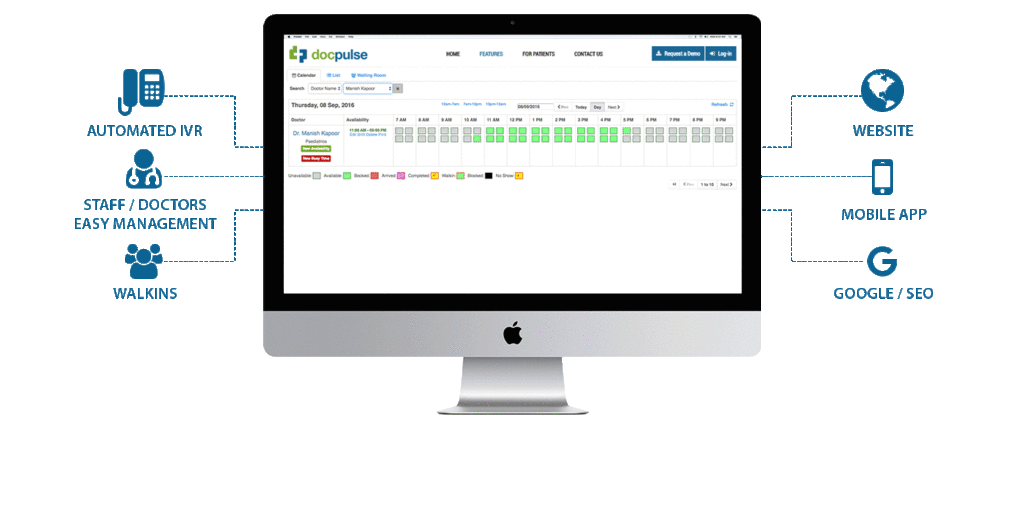
Docpulse is a web-based electronic medical record (EMR) for doctors, laboratories, clinics, and pharmacies. Like AjirMed EMR, its telemedicine and telediagnosis features platform helps care givers go paperless and whille providing the best possible care. With the Docpulse hospital management system, physicians collaborate with other departments and share patient treatment information. Just like AjiirMed, Docpulse electronic medical records (MR) help avoid misreading of doctor notes, write prescriptions quickly, and aid in computation. A free trial is available, or you can call for pricing details.
Docpulse Pros
- Affordable for Small and Mid-Size Facilities – Positioned as a cost-effective EMR solution for clinics and private practices with limited budgets.
- Cloud-Based Access – Enables remote access to patient records and clinic operations from multiple devices.
- Flexible Template System – Allows clinicians to customize clinical documentation templates based on specialty and workflow.
- Gradual Efficiency Improvement – Users typically experience faster charting over time as workflows become familiar.
- Modular and Adaptable Design – Can be configured for different practice types, including outpatient-focused clinics.
- Telemedicine and Digital Workflow Support – Supports modern clinic operations including virtual consultations and digital records management.
Docpulse Cons
- Performance May Vary with Scale – Larger facilities may experience slower performance or workflow limitations depending on configuration.
- Steeper Learning Curve for Full Utilization – While basic use is simple, advanced features may require training and adaptation time.
- Limited Transparency on Data Usage Policies – Some users may require clearer documentation on how clinical data is stored, processed, and used.
- Workflow Efficiency Depends on Setup Quality – Poor initial configuration can negatively affect speed and usability.
- Not Deeply Localized for Nigerian Healthcare Systems – May require customization for HMO structures, billing patterns, and regulatory workflows.
- Customization May Require Vendor Support – Some advanced changes are not fully self-service and depend on platform support.
Cost of Docpulse EMR
| Plan name | Starter |
|---|---|
| 1styear set-up | 900,000 naira |
| 2ndyear renewals | 900,000 naira |
| 3nd year renewals | 900,000 naira |
| 4nd year renewals | 900,000 naira |
| 5nd year renewals | 900,000 naira |
Docpulse Features Breakdown
Docpulse is a cloud-based electronic medical record and clinic management system designed for small to mid-sized healthcare providers. It focuses on ease of use, telemedicine capabilities, and flexible deployment across devices.
1. Electronic Medical Records (EMR) Module
- Patient Registration: Quick patient onboarding with demographic and medical history capture.
- Clinical Documentation: Digital consultation notes, diagnoses, and structured treatment records.
- e-Prescriptions: Generate and manage prescriptions digitally with improved legibility and speed.
- Patient History Access: Retrieve previous visits, treatments, and medical records easily.
- Cross-Department Collaboration: Share patient records between doctors, labs, and pharmacies.
2. Telemedicine & Remote Care
- Video Consultations: Enable remote doctor-patient interactions.
- Telediagnosis Support: Facilitate remote evaluation and follow-up care.
- Remote Access: Physicians can access patient data from any location.
3. Appointment & Scheduling System
- Online Appointment Booking: Patients can schedule visits digitally.
- Doctor Scheduling: Manage availability and clinic calendars.
- Queue Management: Helps reduce waiting time and improve clinic flow.
4. Laboratory & Diagnostic Support
- Lab Integration: Order tests and receive results within the system.
- Digital Reports: Store and access lab reports alongside patient records.
- Basic Diagnostic Workflow: Supports coordination between clinicians and labs.
5. Pharmacy & Prescription Management
- Prescription Handling: Manage medication orders digitally.
- Pharmacy Coordination: Share prescriptions directly with pharmacy units.
- Medication Tracking: Maintain records of prescribed drugs.
6. Cloud-Based Accessibility
- Web-Based System: No installation required; accessible via browser.
- Multi-Device Support: Works on desktops, tablets, and mobile devices.
- Centralized Data Storage: Patient data stored securely in the cloud.
7. Customization & Scalability
- Configurable Workflows: Adapt system to clinic-specific needs.
- Modular Features: Additional capabilities can be enabled as required.
- Scalable Usage: Suitable for growing practices, though primarily optimized for small to mid-sized facilities.
8. Billing & Practice Management
- Basic Billing: Generate invoices for consultations and services.
- Payment Tracking: Monitor patient payments and balances.
- Financial Overview: Simple reporting for clinic revenue tracking.
9. Patient Engagement
- Communication Tools: Engage patients through digital channels.
- Follow-Up Management: Track ongoing care and revisit schedules.
- Patient Experience Focus: Designed to improve accessibility and convenience.
Details: $277 to $70 monthly payments. Payment in dollars
Offers: Referral. Click here for more details on Docpulse EMR pricing
Real-World Deployment Context: Docpulse EMR
Case Study: Private Clinic Implementation
Facility Type: Multi-specialty Private Clinic
Location: Urban Healthcare Center (South Asia / Africa deployment context)
Capacity: 25–40 staff outpatient facility
Challenge
The clinic was managing increasing patient volume using a mix of paper records and basic digital tools. This led to inefficiencies in appointment scheduling, inconsistent patient documentation, and difficulty tracking patient follow-ups and prescriptions.
Solution
Docpulse was implemented as a cloud-based EMR system to digitize patient records, streamline appointment booking, and standardize clinical documentation through customizable templates. Telemedicine and digital consultation workflows were also introduced to support remote patient engagement.
Observed Outcomes
- Improved appointment management – reduced scheduling conflicts and better patient flow coordination
- Faster clinical documentation – template-based records improved consultation speed over time
- Better patient follow-up tracking – automated reminders improved continuity of care
- Increased operational efficiency – reduced administrative workload for clinic staff
Key Impact
Docpulse enabled the clinic to transition from semi-manual workflows to a structured digital system, improving efficiency in outpatient service delivery and patient engagement.
Praxis
Praxis Template
Praxis is an electronic medical records (EMR) system that allows individual freedom when it comes to medical practice. It has comprehansive custom writing for physicians, and is not rigid in its formats. The software studies and imitates doctor behavior on the system, monitors all their activities, including their style of prescription, diagnosis, and charting, and adapts to help them do what they do better. This helps save time for doctors and reduces waiting times for patients. Praxis EMR helps in public health studies and research stuides by providing features that mine patient data. Reports can be created in the electronic medical records system (EMR) and shared as the physician desires.
Just like AjirMed, Praxis Electronic Medical Records EMR allows remote and on-premise deployment and several customizable options. The billing process is very much under the control of finance officers and allows for modification in addition to integration with additional software. Visit the Praxis EMR contact page
Praxis Pros
- Highly Customizable Clinical Workflows – Supports deep configuration for specialty-specific documentation and operational workflows.
- Strong Billing & Claims Framework – Includes structured billing forms and claim templates suitable for insurance-driven environments.
- Flexible Quotation and Pricing Structures – Allows tailored pricing models for different healthcare service scenarios.
- Designed for Complex Clinical Environments – Well-suited for specialist practices that require detailed documentation and structured care pathways.
- Enterprise-Grade Feature Depth – Offers advanced functionality across clinical, administrative, and financial modules.
Praxis Cons
- Undisclosed or Non-Transparent Pricing – Pricing information is not publicly available, making budgeting and comparison difficult for buyers.
- Modular Access Model – Some features may be gated behind paid modules, increasing total cost over time.
- Steep Learning Curve – Requires significant onboarding time due to system complexity and depth of features.
- Less Optimized for Small Clinics – Feature richness may be excessive for smaller practices with simpler workflows.
- Implementation May Require Vendor Support – Customization and setup often depend on vendor-led configuration rather than self-service tools.
- Limited Public Documentation Visibility – External resources, tutorials, and user-facing documentation may be less accessible compared to more modern SaaS competitors.
Cost of Praxis EMR
| Plan name | Starter |
|---|---|
| 1styear set-up | 2,300,000 naira |
| 2ndyear renewals | 2,300,000 naira |
| 3nd year renewals | 2,300,000 naira |
| 4nd year renewals | 2,300,000 naira |
| 5nd year renewals | 2,300,000 naira |
Praxis Features Breakdown
Praxis EMR is a highly adaptive electronic medical record system designed around physician behavior rather than fixed templates. It uses artificial intelligence to learn how clinicians document, diagnose, and prescribe, enabling a personalized and evolving clinical workflow.
1. AI-Driven Clinical Documentation
- Template-Free Charting: Unlike traditional EMRs, Praxis does not rely on rigid templates.
- Adaptive Learning Engine: The system studies physician behavior and continuously improves documentation workflows.
- Personalized Charting Style: Adapts to each doctor’s unique way of writing notes, diagnoses, and prescriptions.
- Progressive Efficiency: Charting becomes faster over time as the system learns user patterns.
2. Electronic Medical Records (EMR) Core Module
- Patient Records Management: Centralized storage of patient demographics, history, and clinical encounters.
- Clinical Notes & Narratives: Free-form documentation with structured data capture in the background.
- Diagnosis & Treatment Tracking: Record and monitor patient conditions and care plans.
- Longitudinal Patient View: Access complete patient journey across visits.
3. Intelligent Data Capture & Reuse
- Knowledge Reuse: Previously entered clinical data can be reused intelligently in future encounters.
- Auto-Suggestions: System suggests relevant content based on past cases and physician behavior.
- Reduced Repetition: Minimizes redundant data entry over time.
4. Research & Data Mining Capabilities
- Clinical Data Mining: Extract insights from patient records for research and public health analysis.
- Custom Report Generation: Generate reports based on clinical and operational data.
- Data Export & Sharing: Share findings for academic or institutional use.
5. Billing & Financial Integration
- Flexible Billing Control: Finance teams can manage and customize billing processes.
- Integration Support: Can integrate with third-party billing and financial systems.
- Revenue Workflow Alignment: Aligns clinical documentation with billing requirements.
6. Deployment & Accessibility
- Cloud & On-Premise Options: Flexible deployment depending on facility needs.
- Remote Access: Physicians can access records from multiple locations.
- Scalable Usage: Suitable for individual practitioners and expanding practices.
7. Customization & Workflow Flexibility
- Physician-Centric Design: Built to match real clinical workflows rather than enforce rigid processes.
- Highly Customizable: Adapts to different specialties and practice styles.
- No Template Limitation: Eliminates constraints seen in traditional EMRs.
8. Patient Care Efficiency
- Reduced Documentation Time: AI assistance lowers time spent on charting.
- Improved Patient Throughput: Helps reduce waiting time as clinicians become more efficient.
- Enhanced Clinical Focus: Allows doctors to spend more time with patients instead of data entry.
Details: $259 monthly. Payment in dollars
Offers: Click here for more details on Praxis EMR pricing
Real-World Deployment Context: Praxis EMR
Case Study: Specialist Practice Implementation
Facility Type: Multi-Specialty Private Practice
Location: Urban Specialist Care Center (North America / International deployment context)
Capacity: 10–30 physicians across specialties
Challenge
The practice required a highly structured EMR system capable of supporting complex specialty documentation, detailed billing workflows, and insurance claim processing. Existing tools were fragmented and lacked the depth needed for specialty-driven clinical workflows.
Solution
Praxis EMR was implemented as a highly customizable system focused on specialty-specific documentation. It enabled clinicians to build adaptive templates, streamline clinical notes, and integrate billing and claims workflows within a unified system.
Observed Outcomes
- Improved documentation efficiency over time – clinicians experienced faster charting after system adaptation
- More structured billing workflows – improved consistency in claims preparation and submission
- High customization for specialty care – templates adapted to different clinical disciplines
- Gradual productivity improvement – system efficiency increased with continued use and customization
Key Impact
Praxis supported the transition from fragmented documentation systems to a highly structured, specialty-focused EMR environment, improving consistency in clinical and billing workflows for specialist practices.
OpenMRS
Open Source Community
OpenMRS is a collaborative open-source project to develop a software platform and a relevant implementation, focused on delivering health care in developing countries. It is a highly customizable EMR system used by thousands of health facilities globally, especially in low-resource environments.
Just like AjirMed, OpenMRS provides a modular architecture that allows hospitals to select and configure features based on their specific needs. It is built to work in environments with limited resources, offering robust offline capabilities and a global community-driven support ecosystem. OpenMRS is particularly favored by public health institutions and NGO-led facilities in Nigeria due to its flexibility and lack of software licensing fees. Advance patient experience by exploring the OpenMRS demo.
OpenMRS is a highly scalable, community-driven framework frequently utilized by public health systems and government teaching hospitals across Nigeria. As a customizable open source EMR Nigeria relies on, it provides total control over the codebase and features a zero-cost software license, though it requires dedicated, in-house technical support for deployment and maintenance.
Cost of OpenMRS EMR
| Plan name | Community Edition |
|---|---|
| 1styear set-up | ₦2M – ₦10M+ |
| 2ndyear renewals | ₦1M – ₦5M+ |
| 3nd year renewals | ₦1M – ₦5M+ |
| 4nd year renewals | ₦1M – ₦5M+ |
| 5nd year renewals | ₦1M – ₦5M+ |
OpenMRS Features Breakdown
OpenMRS is a modular, community-driven electronic medical record platform designed specifically for the needs of healthcare providers in developing countries. It emphasizes flexibility, interoperability, and long-term sustainability through a global developer network.
1. Modular EMR Architecture
- Core Patient Dashboard: Unified view of patient demographics, medical history, and clinical encounters.
- Customizable Modules: Add or remove features such as LIMS, Pharmacy, or Billing based on facility requirements.
- Concept Dictionary: Standardized medical terminology support (CIEL/OMRS) for consistent data capture.
- Extensible Data Model: Allows developers to create custom data fields and observation types.
2. Offline & Low-Resource Optimization
- Local Server Deployment: Operates reliably without continuous internet connectivity.
- Sync Capabilities: Data can be synchronized with central servers when internet is available.
- Low Power Requirements: Optimized for hardware typically found in resource-constrained clinics.
3. Interoperability & Standards Compliance
- HL7 & FHIR Support: Facilitates data exchange with other healthcare systems and laboratory equipment.
- RESTful API: Enables integration with mobile apps and third-party digital health tools.
- Open Standards: Built on industry-standard technologies to prevent vendor lock-in.
4. Community & Partner Ecosystem
- Bahmni Distribution: A popular OpenMRS distribution that includes LIMS (Senaite) and ERP (Odoo).
- Reference Application: A standard user interface for outpatient and basic inpatient care.
- Global Support Network: Access to a massive community of developers and healthcare experts.
5. Clinical Decision Support
- Logic Module: Enables the creation of alerts and reminders based on patient data.
- Reporting Tools: Generate public health reports and operational analytics.
- Order Entry: Manage prescriptions and laboratory requests digitally.
Offers: Free Software License. Click here for more details on OpenMRS implementation resources
OpenMRS Pros
- Free & Open-Source Software – No license fees for the core platform, making it accessible for public health and NGO projects.
- Massive Global Community – Supported by a dedicated network of developers, implementers, and medical professionals worldwide.
- Built for Developing Countries – Designed from the ground up for use in low-resource and rural healthcare settings.
- No Vendor Lock-In – Hospitals have full control over their data and the ability to switch support partners at any time.
- Extreme Customization – Modular design allows for deep tailoring to specific clinical specialties and workflows.
OpenMRS Cons
- Requires High Technical Expertise – Setting up and maintaining OpenMRS requires skilled IT staff or expensive external consultants.
- Not a Turnkey Solution – Out-of-the-box functionality may require significant configuration before it is ready for clinical use.
- Fragmented Documentation – Due to its community nature, documentation can sometimes be outdated or inconsistent across different versions.
- User Interface Varies – The UI experience depends heavily on the specific distribution (e.g., Bahmni vs. RefApp) being used.
- Hidden Infrastructure Costs – While the software is free, the cost of servers, networking, and technical support can be substantial.
Real-World Deployment Context: OpenMRS
Case Study: Public Health & NGO Implementation
Facility Type: Public Health Facility / NGO-Supported Clinic
Location: Northern Nigeria (Rural/Urban Transition)
Capacity: 40-bed facility with high outpatient volume
Challenge
The facility was managing a high volume of patients with complex longitudinal care needs (HIV, TB, and Maternal Health) using paper registers. Lack of internet connectivity made cloud-based solutions impossible, and the facility had no budget for software licensing fees.
Solution
OpenMRS (specifically the Bahmni distribution) was deployed on a robust local server. The system was configured with specific modules for HIV care and antenatal tracking. Staff were trained to use the system on a local area network, ensuring it worked regardless of internet availability.
Observed Outcomes
- 50% reduction in paper record usage – digitized patient registers and clinical notes
- Improved longitudinal care tracking – better visibility into patient adherence for chronic conditions
- Enhanced data reporting – automated generation of monthly reports for the Ministry of Health (MOH)
- Sustainable operation – no recurring software licenses allowed the budget to focus on infrastructure maintenance
Key Impact
OpenMRS enabled a resource-constrained facility to achieve high-quality digital health records and reporting without the burden of software licensing, proving its effectiveness in low-resource public health environments.
Epic
Epic System
Epic Electronic Medical Records is a cloud-based hospital management system for different hospital needs. It can be used for community-based medicine, solo practices, or teaching. Epic is used in patient engagement and telemedicine, and it includes a comprehensive portal for doctor-to-patient communication to help with treatment monitoring. You can subscribe to the basic or advanced plan, and relevant modules will be activated depending on how much you pay.
The Epic API allows the software to communicate with other software. The Epic electronic medical record has been around for a while and is equipped with finance, appointment, report, diagnosis, and e-prescription features to make care easier for physicians.
Cost of Epic EMR
| Plan name | Starter |
|---|---|
| 1styear set-up | 11,000,000 naira |
| 2ndyear renewals | 11,000,000 naira |
| 3nd year renewals | 11,000,000 naira |
| 4nd year renewals | 11,000,000 naira |
| 5nd year renewals | 11,000,000 naira |
Epic Features Breakdown
Epic is a comprehensive, enterprise-grade electronic medical record and healthcare management platform designed for large hospitals, health systems, and academic medical centers. It provides deep integration across clinical, administrative, and financial workflows, with strong interoperability and patient engagement capabilities.
1. Electronic Medical Records (EMR) Core Module
- Patient Registration & Demographics: Centralized patient database with detailed demographic and clinical data.
- Clinical Documentation: Structured templates, charting tools, and specialty-specific workflows.
- e-Prescribing: Digital prescription management with medication history tracking.
- Longitudinal Patient Records: Comprehensive view of patient history across all care settings.
- Multi-Disciplinary Access: Enables collaboration across departments and specialties.
2. Interoperability & API Integration
- Epic API Integration: Connects with third-party systems, devices, and healthcare platforms.
- Health Information Exchange (HIE): Enables secure sharing of patient data across institutions.
- System Integration: Supports labs, imaging systems, pharmacies, and external providers.
- Data Standardization: Ensures consistent data formats across systems.
3. Patient Engagement & Portal
- Patient Portal: Patients can access records, test results, and care plans.
- Secure Messaging: Direct communication between patients and healthcare providers.
- Telemedicine Support: Virtual consultations and remote care management.
- Appointment Management: Scheduling and follow-up coordination.
4. Clinical Workflow Optimization
- Specialty Workflows: Tailored workflows for different medical specialties.
- Clinical Decision Support: Alerts, reminders, and evidence-based recommendations.
- Order Management: Streamlined ordering of labs, imaging, and procedures.
- Care Coordination: Ensures continuity of care across departments.
5. Revenue Cycle & Financial Management
- Billing & Coding: Comprehensive billing workflows with coding support.
- Claims Processing: Integration with insurance systems for claims submission.
- Revenue Cycle Management: End-to-end financial tracking from service to payment.
- Financial Analytics: Insights into hospital revenue and performance.
6. Scheduling & Operational Management
- Appointment Scheduling: Manage patient visits across departments.
- Resource Allocation: Optimize use of staff, rooms, and equipment.
- Workflow Automation: Reduce manual administrative tasks.
7. Analytics & Population Health
- Clinical Analytics: Data-driven insights into patient outcomes.
- Population Health Management: Tools for managing large patient populations.
- Reporting Dashboards: Real-time operational and clinical reports.
- Research Support: Enables large-scale data analysis for academic and clinical research.
8. Scalability & Enterprise Deployment
- Multi-Facility Support: Designed for hospital networks and large institutions.
- Cloud & Hybrid Deployment: Flexible infrastructure options.
- Role-Based Access Control: Advanced security and user permission systems.
- High Availability: Built for reliability in mission-critical environments.
Details: $1200 to $500,000 in implementation cost. Monthly payments.
Offers: Referral. Click here for more details on Epic EMR pricing
Epic Pros
- Highly Comprehensive Enterprise EMR – Offers end-to-end hospital management including clinical, administrative, and population health systems.
- Strong Medication Management System – Advanced tools for medication ordering, administration tracking, and patient safety checks.
- Deep Clinical Workflow Integration – Designed to support large, complex healthcare systems with highly structured care pathways.
- Extensive Feature Ecosystem – Includes modules for scheduling, billing, EHR, analytics, patient engagement, and interoperability.
- Widely Adopted in Major Healthcare Institutions – Used by large hospitals and academic medical centers globally, supporting standardization at scale.
Epic Cons
- Very High Cost of Ownership – Implementation, licensing, and maintenance costs make it unsuitable for small and mid-size hospitals.
- Complex Implementation Process – Deployment requires extensive planning, infrastructure, and vendor-led configuration.
- Steep Learning Curve for Users – Despite usability improvements, full system mastery requires significant training time for clinical staff.
- Performance Can Be Resource-Heavy – Requires strong IT infrastructure to maintain optimal speed and responsiveness.
- Limited Suitability for Emerging Markets – Often not optimized for localized workflows such as HMO structures or resource-constrained environments.
- Customization Requires Vendor Support – System modifications typically depend on Epic-certified consultants and structured change processes.
Real-World Deployment Context: Epic EMR
Case Study: Large Academic Medical Center Implementation
Facility Type: Academic Medical Center / Tertiary Hospital
Location: United States (Enterprise Healthcare System)
Capacity: 500–1,000+ bed hospital network
Challenge
The institution required a highly integrated, enterprise-scale electronic medical record system capable of supporting complex clinical workflows across multiple specialties, research operations, inpatient and outpatient care, and large-scale hospital administration. Legacy systems were fragmented, limiting data continuity and cross-department coordination.
Solution
Epic EMR was implemented as a centralized enterprise platform to unify clinical documentation, medication management, scheduling, billing, and patient engagement systems. The deployment focused on standardizing workflows across departments while enabling interoperability within a large hospital ecosystem.
Observed Outcomes
- Improved care coordination across departments – enabled unified patient records accessible across specialties and care teams
- Enhanced medication safety workflows – strengthened clinical checks for prescribing, administration, and monitoring
- Standardized clinical documentation – improved consistency in patient records across large hospital networks
- Expanded interoperability within enterprise systems – supported integration with labs, imaging, and external healthcare networks
Key Impact
Epic enabled large academic and enterprise hospital systems to consolidate fragmented clinical operations into a unified digital ecosystem, improving coordination, data consistency, and large-scale healthcare delivery efficiency.

Meditech
Medical information technology
Meditech Electronic Medical Records EMR automates daily operations for hospitals and delivers modern digital records for a better patient experience. It can be used by different-sized facilities to handle reporting, appointments, finance charting, and so on. It can be used for home care services, service ordering, and documentation. The hospital using this software to manage their facility can collect patient vitals, view laboratory results, prescriptions, medical histories, and diagnoses on the go.
Just like AjirMed EMR, the dashboard capabilities of Meditech's electronic medical record EMR allow caregivers to view treatment activities and group information to make a unified and broader decision. The software is customizable, and users can select features that they need, such as diet treatment. The system allows for continuity of care, and the electronic medical record can be used on different versions of the Windows operating system.
Cost of Meditech EMR
| Plan name | Starter |
|---|---|
| 1styear set-up | 400,000 naira |
| 2ndyear renewals | 400,000 naira |
| 3nd year renewals | 400,000 naira |
| 4nd year renewals | 400,000 naira |
| 5nd year renewals | 400,000 naira |
Meditech Features Breakdown
Meditech EMR is a hospital-focused electronic medical record system designed to streamline clinical workflows, improve patient safety, and support continuity of care. It provides a balance between enterprise-level functionality and modular flexibility for healthcare facilities of different sizes.
1. Electronic Medical Records (EMR) Core Module
- Patient Registration & Records: Centralized patient data including demographics, history, and encounters.
- Clinical Documentation: Structured charting tools for diagnoses, treatments, and physician notes.
- Real-Time Data Access: Clinicians can view patient information instantly across departments.
- Longitudinal Patient Records: Tracks patient care over time for better clinical decisions.
2. Clinical Workflow & Care Coordination
- Unified Dashboard: Provides a consolidated view of patient activities and treatment plans.
- Care Team Collaboration: Enables coordination between doctors, nurses, and allied health professionals.
- Service Ordering: Manage lab tests, imaging, and procedures within the system.
- Continuity of Care: Ensures consistent patient management across different care settings.
3. Medication Management & Patient Safety
- e-Prescribing: Digital prescription management with improved accuracy.
- Medication Administration Tracking: Monitor drug administration and reduce errors.
- Clinical Safety Checks: Helps ensure correct medication usage and dosage control.
4. Laboratory & Diagnostic Integration
- Lab Results Access: View laboratory reports directly within patient records.
- Diagnostic Coordination: Integrates lab and diagnostic workflows with clinical care.
- Result Tracking: Monitor test progress and outcomes.
5. Administrative & Financial Management
- Billing & Finance: Manage hospital billing and financial processes.
- Appointment Scheduling: Organize patient visits and clinician availability.
- Operational Reporting: Generate reports for administrative and clinical performance.
6. Home Care & Extended Services
- Home Care Support: Extend care management beyond hospital settings.
- Remote Access: Enables clinicians to manage patient data outside the facility.
- Care Continuum Coverage: Supports outpatient, inpatient, and home-based care.
7. Customization & Modular Deployment
- Feature-Based Pricing: Pay for only the modules required.
- Configurable Workflows: Adapt system to facility-specific processes.
- Scalable Architecture: Suitable for small hospitals to larger institutions.
8. System Accessibility & Deployment
- Multi-Device Access: Use across desktops and supported devices.
- Windows Compatibility: Works across multiple versions of Windows OS.
- Flexible Deployment: Supports different infrastructure setups.
9. Analytics & Reporting
- Clinical Reporting: Analyze patient outcomes and treatment effectiveness.
- Operational Dashboards: Monitor hospital workflows and efficiency.
- Data-Driven Decisions: Supports better planning and management.
Details: $49 monthly for a single user . Monthly payments.
Offers: Referral. Click here for more details on Meditech EMR pricing
MEDITECH Pros
- Established Enterprise EMR Provider – Long-standing electronic medical record system widely used in hospitals and healthcare networks globally.
- Hybrid Deployment Options – Supports both on-premise and cloud-based configurations depending on hospital infrastructure and needs.
- Comprehensive Clinical Coverage – Includes core hospital functions such as patient records, clinical documentation, ordering, and results management.
- Strong Focus on Hospital-Wide Integration – Designed to unify multiple departments including labs, pharmacy, radiology, and administration.
- Reliable Stability in Large Institutions – Built for enterprise environments requiring high availability and consistent uptime.
- Broad Feature Set for Acute Care Settings – Particularly suited for inpatient-heavy hospitals and complex care environments.
MEDITECH Cons
- Very High Implementation and Maintenance Cost – Significant financial investment required for deployment, customization, and long-term support.
- Complex Configuration Process – Setup and optimization often require specialized consultants and extended implementation timelines.
- Steep Learning Curve – Clinical and administrative staff typically require extensive training to fully utilize the system.
- Less Flexible User Interface Compared to Modern Cloud EMRs – Interface may feel less intuitive compared to newer SaaS-based competitors.
- Limited Suitability for Small and Mid-Size Hospitals – Best suited for large-scale healthcare organizations due to system complexity and cost structure.
- Limited Localization for Emerging Markets – May require customization to align with local billing systems, regulatory frameworks, and workflows in countries like Nigeria.
Real-World Deployment Context: MEDITECH EMR
Case Study: Large Hospital Network Implementation
Facility Type: Integrated Health System / Multi-Hospital Network
Location: North America (Enterprise Healthcare Environment)
Capacity: Multi-site hospital network (300–800+ beds combined)
Challenge
The health system required a unified electronic medical record platform capable of supporting multiple hospitals, outpatient clinics, and acute care facilities under one coordinated digital infrastructure. Existing systems were fragmented across sites, resulting in inconsistent patient records, duplicated workflows, and limited visibility across the network.
Solution
MEDITECH was deployed as a centralized hospital information system with hybrid deployment capabilities, enabling both on-premise and cloud-based configurations. The system was configured to unify clinical documentation, inpatient and outpatient workflows, laboratory and pharmacy systems, and administrative operations across multiple facilities.
Observed Outcomes
- Improved cross-facility patient record access – enabled continuity of care across multiple hospitals within the network
- Enhanced hospital-wide operational coordination – standardized workflows across departments and facilities
- Better integration of clinical departments – unified lab, pharmacy, and radiology data within a single system
- Improved system reliability in enterprise environments – stable performance across high-volume acute care settings
Key Impact
MEDITECH enabled large healthcare networks to transition from fragmented, site-based systems to a more unified enterprise infrastructure, improving continuity of care, operational coordination, and system-wide data visibility.
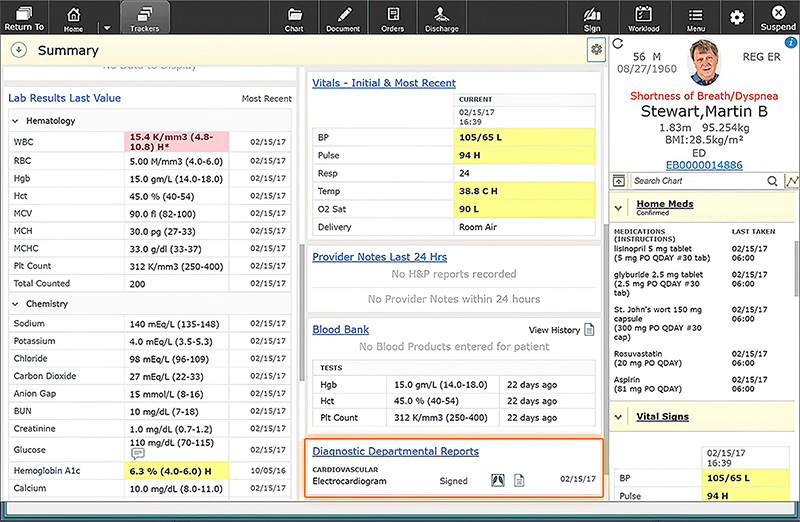
What is a medical record?
Medical record?
Medical records found in hospitals, clinics, and independent practice centers are systematic documentations of patients’ medical care and history. Medical records contain a broader view of the patient’s health information that includes health history, billing information, identification information, findings of medical examinations, recommended tests and test results, diagnosis, and present and past medication histories. A written record must be maintained for every person who has been admitted to the hospital as an inpatient, outpatient, or emergency patient. These medical records document the patient's hospital experience. What are the formats and types of medical records?
Types of formats for medical records include:
- Paper records
- Electronic medical record
- Hybrid records
Paper Medical records
Paper records are paper-based and kept in folders; the folders are then filed into a larger filing system for easy location. The disadvantages of paper records are that they can take up too much physical space and are easier to lose or misfile.
Hybrid Medical records
Hybrid records contain some electronically stored information and some paper-based information. Paper documents can be switched to electronic. And there are some that use multiple software or modules that don’t reconcile. We also could categorize a situation where a facility started using an electronic medical record but painfully stopped along the way due to one reason or another as hybrid. Their subscription has not expired, but they are have abandoned the EMR software due to certain glitches
What is an Electronic Medical Record (EMR)?
Electronic Medical Record Definition
An Electronic Medical Record (EMR) is a digital version of a patient’s paper medical file that is securely stored and managed using computer systems within hospitals, clinics, and other healthcare facilities.
EMRs contain important patient health information such as medical history, diagnoses, laboratory results, prescriptions, treatment plans, radiology reports, allergies, vital signs, and clinical notes. Unlike traditional paper records, electronic medical records allow authorized healthcare professionals to access patient information quickly and simultaneously across different departments.
An electronic medical record improves the efficiency, accuracy, and coordination of healthcare delivery by reducing manual paperwork, minimizing record loss, and supporting faster clinical decision-making. EMR systems also help hospitals improve patient management, reduce waiting times, and streamline communication between doctors, nurses, pharmacists, and laboratory personnel.
Modern hospital management platforms such as AjirMed EMR provide advanced electronic medical record capabilities that help healthcare facilities transition from paper-based operations to integrated digital healthcare systems.
Electronic medical records are now considered an essential component of modern healthcare technology and digital hospital transformation worldwide.
Why Do Hospitals and Clinics Need an Electronic Medical Record (EMR)?
Four (4) Major Ways an Electronic Medical Record (EMR) Improves Healthcare Delivery
Electronic Medical Records (EMR) systems help hospitals, clinics, and healthcare professionals improve the quality, speed, and coordination of patient care. Unlike traditional paper records, EMR software provides real-time access to patient information, clinical history, laboratory results, prescriptions, and treatment plans from a centralized digital platform.
Modern EMR systems reduce dependence on manual paperwork and memory-based processes while helping healthcare providers make faster and more informed clinical decisions. From patient registration and appointment scheduling to drug prescriptions and laboratory management, electronic medical records improve operational efficiency and reduce medical errors across healthcare facilities.
Healthcare providers using advanced systems such as AjirMed EMR can securely access patient information remotely, coordinate care between departments, and streamline hospital workflows in ways that are difficult to achieve with paper-based systems.
-
MEMORY AND CLINICAL DOCUMENTATION SUPPORT:
Electronic medical records help healthcare professionals reduce reliance on memory alone during patient care. EMR systems provide quick access to patient histories, previous diagnoses, medications, allergies, laboratory results, and treatment records. This helps clinicians avoid costly omissions, improve treatment consistency, and maintain accurate medical documentation even in high-pressure clinical environments. -
COLLABORATION AND WORKFLOW COORDINATION:
EMR systems improve communication between doctors, nurses, pharmacists, laboratory personnel, front desk staff, and patients. Appointment scheduling, laboratory requests, prescriptions, and patient updates can be shared instantly across departments. Staff spend less time handling paper files and more time focusing on patient care and operational efficiency. -
COMPUTATIONAL AND INFORMATION MANAGEMENT SUPPORT:
Electronic medical records organize large volumes of healthcare information into structured and easily accessible digital formats. Drug charts, physician notes, laboratory results, and prescription records are presented clearly to reduce confusion and improve accuracy. Automated timestamps, prescription tracking, and digital summaries also help minimize medication and documentation errors. -
CLINICAL DECISION SUPPORT AND REMOTE ACCESS:
Modern EMR software assists healthcare professionals in making evidence-based decisions using integrated patient data from multiple sources. Clinicians can remotely access patient records, laboratory results, medication histories, and treatment progress from different locations. Features such as drug interaction alerts, patient monitoring tools, preventive care documentation, and digital note-taking improve both patient safety and long-term healthcare outcomes.
As hospitals continue to adopt digital healthcare technologies, Electronic Medical Record systems have become essential tools for improving healthcare delivery, patient safety, administrative efficiency, and long-term hospital management.
Advantages of an Electronic Medical Record (EMR)
Benefits of Electronic Medical Records for Hospitals and Clinics
Electronic Medical Records (EMR) systems help hospitals, clinics, and healthcare organizations improve patient care, streamline hospital operations, and reduce the limitations associated with paper-based medical records. Below are some of the major advantages of implementing an EMR system in healthcare facilities.
- SPACE SAVING: Electronic medical records eliminate the need for large paper file storage systems, helping hospitals and clinics free up office space and reduce physical record management challenges.
- BETTER PATIENT ENGAGEMENT: EMR systems improve communication between healthcare providers and patients through appointment scheduling, digital follow-up systems, reminders, and improved doctor-patient interaction.
- REMOTE ACCESS & CONVENIENCE: Authorized healthcare professionals can securely access patient records remotely, making EMR systems valuable for telemedicine, outreach healthcare programs, and multi-branch hospital operations.
- IMPROVED PRODUCTIVITY: Electronic medical records automate many clinical and administrative processes, helping hospitals improve workflow efficiency, reduce manual documentation, and support regulatory and government reporting compliance.
- LOWER OPERATIONAL COSTS: By reducing paper usage, printing costs, physical storage expenses, and repetitive administrative tasks, EMR systems help healthcare facilities minimize operational costs over time.
- AUTOMATED REMINDERS & COMMUNICATION: Modern EMR platforms support SMS alerts, email notifications, appointment reminders, and custom web-based communication tools that improve patient follow-up and clinical task completion.
- DATA SECURITY & ACCESS CONTROL: Electronic medical records provide role-based access control, ensuring that sensitive patient information is only accessible to authorized healthcare personnel based on their responsibilities.
- FASTER ACCESS TO PATIENT INFORMATION: Doctors, nurses, pharmacists, and laboratory staff can retrieve patient records instantly, improving clinical decision-making and reducing delays in treatment delivery.
- BETTER CARE COORDINATION: Integrated EMR systems improve communication between departments such as consultation, laboratory, pharmacy, billing, and radiology, leading to better continuity of patient care.
- REDUCED MEDICAL ERRORS: Electronic prescribing, standardized documentation, and digital treatment records help reduce prescription errors, duplicate entries, and missing patient information.
Modern healthcare institutions increasingly rely on Electronic Medical Record (EMR) systems to support digital transformation, improve healthcare delivery, and enhance operational efficiency across hospitals and clinics.
How to Choose the Best Electronic Medical Record (EMR) for Hospitals in Nigeria in 2026
7 Important Steps to Choose the Right EMR Software for Nigerian Hospitals
The adoption of Electronic Medical Records (EMR) systems in Nigerian hospitals continues to grow as healthcare facilities increasingly seek faster, safer, and more efficient ways to manage patient information and hospital operations. However, many hospitals still struggle with selecting the right EMR software for their clinical and administrative needs.
One of the major reasons EMR implementation remains challenging in Nigeria is the lack of digital readiness in some healthcare facilities. Common challenges include unstable electricity supply, poor network connectivity between departments, limited IT infrastructure, insufficient staff training, and concerns about deployment costs. Even when hospitals decide to transition from paper records to digital systems, choosing the wrong EMR can lead to operational setbacks, wasted investment, and staff frustration.
Interestingly, many hospitals that already purchased EMR software are still unable to use it effectively in their daily operations. In some facilities, healthcare workers continue carrying paper files from one department to another despite having electronic medical record systems installed. This usually happens because the software does not align with the hospital’s workflow, lacks necessary features, or the vendor fails to provide ongoing support and system improvements.
Some hospital administrators become skeptical about EMR systems after multiple failed implementations. Others have invested heavily in hospital software that eventually became abandoned due to poor usability, inadequate customization, or lack of vendor responsiveness. In many cases, hospitals only discover these weaknesses after deployment.
This is why choosing the right EMR software is one of the most important digital transformation decisions for any healthcare facility. A well-designed EMR system can improve patient management, reduce waiting times, streamline billing, support laboratory integration, improve prescription accuracy, and enhance communication across departments.
If you are evaluating hospital management software or planning to deploy an EMR system in your facility, the following steps can help you make a better and more informed decision.
-
Identify Your Hospital’s Biggest Operational Problems
Before choosing an Electronic Medical Record system, identify the major operational and clinical challenges affecting your healthcare facility. Every hospital has unique workflows and priorities. Some facilities struggle with long patient waiting times, poor laboratory coordination, inefficient billing systems, scattered HMO records, or delays in prescription management.
For example, your hospital may require:
- Integrated laboratory and pharmacy workflows
- Electronic prescriptions (e-prescriptions)
- Remote access to patient treatment history
- Automated HMO billing and claims management
- Nursing reminders for drug administration and patient care
- Real-time access to laboratory results for doctors
Clearly identifying your operational needs helps you focus on the features that truly matter to your hospital instead of being distracted by unnecessary software features or persuasive marketing presentations.
-
Involve Doctors, Nurses, and Administrative Staff Early
Successful EMR implementation requires collaboration between management, clinicians, nurses, laboratory staff, pharmacists, accountants, and IT personnel. These are the people who understand the day-to-day operational challenges within the hospital.
Healthcare workers who currently handle paper records or use an existing EMR system can provide valuable insight into workflow inefficiencies, documentation problems, and patient management difficulties. Their feedback is essential when evaluating different EMR solutions.
By involving staff early, hospitals increase user acceptance, reduce resistance to digital transition, and improve the chances of long-term EMR adoption.
-
Seek Advice from Other Hospitals and Medical Professionals
One of the best ways to evaluate an EMR system is to speak with healthcare professionals who actively use it in their daily operations. Ask fellow doctors, hospital administrators, and colleagues about their experiences with different hospital management software solutions.
Questions you should ask include:
- Is the EMR actively used every day?
- How responsive is the vendor’s support team?
- What problems did the software solve?
- What limitations still exist?
- How long did implementation and staff adaptation take?
- Would they recommend the software to another hospital?
You may also discuss EMR recommendations within professional healthcare associations, medical WhatsApp groups, and healthcare management communities. Gathering real-world feedback can help you avoid costly implementation mistakes.
-
Request a Live Demo or Free Trial
A software demo or free trial is one of the most important stages in selecting an Electronic Medical Record system. During this stage, your hospital should thoroughly test the software’s usability, workflow efficiency, speed, reporting capabilities, and department integration.
Rather than rushing through multiple demonstrations, evaluate one or two EMR systems carefully at a time. Simulate real hospital workflows such as:
- Patient registration
- Consultation documentation
- Laboratory requests and result processing
- Prescription management
- Billing and HMO reconciliation
- Inventory and pharmacy workflows
Encourage doctors, nurses, and administrative staff to provide structured feedback after each demonstration. This helps management make objective decisions based on usability and operational efficiency instead of sales presentations alone.
You can also request a live AjirMed EMR demo or free trial to evaluate how the system fits your hospital workflow.
-
Determine Your Budget and Long-Term Operational Costs
Budget planning is a critical aspect of EMR implementation. Beyond the initial software cost, hospitals should consider:
- Training expenses
- Hardware and computer requirements
- Internet and networking infrastructure
- Power backup solutions
- System customization costs
- Technical support and maintenance
- Future upgrade requirements
Some EMR vendors charge separately for software updates, feature expansion, or technical support. Ensure you understand the full long-term financial commitment before making a decision.
You can also explore AjirMed EMR pricing and hospital software cost information to understand deployment considerations for Nigerian healthcare facilities.
-
Re-evaluate Your Final Shortlist Carefully
Before making a final purchase decision, revisit your shortlisted EMR systems and compare them carefully against your original operational goals.
Speak again with hospitals currently using the software and confirm:
- Daily usability and staff satisfaction
- System reliability during busy clinical hours
- Vendor responsiveness to feature requests
- Speed of technical support resolution
- Long-term sustainability of the software
Avoid making emotionally driven decisions or choosing software based solely on attractive presentations. A good EMR should consistently improve clinical workflows, administrative efficiency, and patient experience over time.
-
Implement Proper Staff Training and Change Management
Even the best Electronic Medical Record software can fail if staff members are not properly trained. Hospitals should develop structured training plans for doctors, nurses, pharmacists, accountants, laboratory personnel, and front desk staff.
Training may include:
- On-site implementation support
- Video tutorials and documentation
- Remote support sessions
- Department-specific workflow training
- Continuous refresher sessions for new staff
Healthcare technology continues to evolve, and EMR vendors regularly release updates and new functionality. Encourage staff to stay informed about system improvements and maintain ongoing communication with your software provider.
Most importantly, educate your team on why the hospital chose the EMR system and how it will improve patient care, operational efficiency, and overall healthcare delivery.
Essential Features of an Electronic Medical Record (EMR)
Critical Features Every Hospital EMR System Should Have
An effective Electronic Medical Record (EMR) system should provide the core clinical, administrative, laboratory, pharmacy, and financial tools required for the smooth operation of a modern healthcare facility. Whether you operate a small clinic, specialist hospital, diagnostic centre, or multi-branch healthcare institution, certain EMR functionalities are considered essential for efficient patient care and hospital management.
Without these core features, a hospital management system may struggle to support daily medical workflows, patient documentation, billing processes, laboratory coordination, and healthcare reporting requirements. The best EMR software for Nigerian hospitals should therefore combine clinical efficiency, workflow automation, data security, and integrated hospital operations in a single platform.
Many of the leading Electronic Medical Record systems we reviewed above include these critical functionalities, especially advanced hospital management solutions such as AjirMed EMR.
Below are some of the most important features every modern EMR software should provide:
-
Patient Registration and Medical Records Management
Centralized digital patient records including demographics, treatment history, clinical notes, and visit tracking. -
Patient Vitals Collection
Recording and monitoring of temperature, blood pressure, pulse rate, oxygen saturation, weight, BMI, and other clinical observations. -
Laboratory Information Management
Integrated laboratory request processing, test result management, and automated delivery of laboratory reports to clinicians. -
Pharmacy, Inventory, and Stock Management
Medication dispensing, pharmacy billing, drug stock tracking, inventory monitoring, expiry alerts, and procurement management. -
Antenatal and Maternal Care Management
Comprehensive antenatal documentation, maternal health tracking, pregnancy monitoring, delivery records, and follow-up care workflows. -
Integrated Finance and Billing System
Hospital billing, invoicing, payment tracking, revenue management, and financial reporting integrated directly into clinical workflows. -
HMO and Insurance Management
Support for multiple HMO tariffs, insurance billing structures, claims reconciliation, and patient coverage management. -
Drug Prescription History
Access to previous prescriptions, medication usage history, refill tracking, and prescription monitoring. -
Past and Present Medical History Documentation
Comprehensive patient history management including chronic illnesses, previous admissions, ongoing treatments, and long-term care records. -
Allergy and Clinical Condition Alerts
Automatic alerts for allergies, chronic conditions, contraindications, and other patient safety indicators. -
Diagnosis and Clinical Assessment Tools
Structured diagnosis recording, treatment planning, clinical notes, and disease management workflows. -
Surgeries and Procedures Management
Surgical scheduling, theatre documentation, procedure tracking, consent forms, and postoperative care management. -
Drug Tracking and Medication Charting
Monitoring of administered medications, nursing drug charts, dosage schedules, and medication compliance. -
Ward and Bed Management
Admission management, inpatient monitoring, ward allocation, discharge processing, and bed occupancy tracking. -
Family Card and Linked Patient Accounts
Management of family-linked medical records, household billing, and grouped patient relationships. -
24/7 Secure Access to Patient Records
Authorized access to electronic medical records from multiple hospital departments and approved remote locations. -
User Role Management and Access Segregation
Role-based permissions for doctors, nurses, laboratory staff, pharmacists, accountants, and administrators. -
Data Encryption and Digital Security
Secure encryption, digital signatures, audit trails, and protection of sensitive patient health information. -
Reporting and Hospital Analytics
Generation of operational, clinical, financial, and management reports for decision-making and regulatory compliance. -
Interdepartmental Workflow Integration
Seamless communication between consultation, laboratory, pharmacy, nursing, billing, and management departments.
Modern hospitals increasingly depend on integrated EMR systems to improve patient care quality, reduce administrative workload, enhance operational efficiency, and support digital healthcare transformation. Choosing an Electronic Medical Record with these essential features can significantly improve the long-term performance and sustainability of healthcare facilities in Nigeria.
Cost of Hospital Electronic Medical Record (EMR) and EHR Software in Nigeria
How Much Does EMR or EHR Software Cost for Hospitals in Nigeria?
The cost of implementing an Electronic Medical Record (EMR) or Electronic Health Record (EHR) software system is one of the major factors affecting digital healthcare adoption in Nigeria. Many hospitals, clinics, and specialist medical centers struggle to adopt hospital management software because of high setup fees, subscription charges, maintenance costs, and staff training expenses.
Most healthcare facilities in Nigeria rely heavily on patient payments and internally generated revenue. As a result, many hospitals search for affordable EMR software solutions that can improve patient care, automate medical records management, and reduce paperwork without creating excessive financial pressure.
The total cost of EMR software in Nigeria depends on several factors, including:
- Initial software setup and deployment cost
- Monthly or yearly subscription fees
- Cloud hosting or server infrastructure
- Number of hospital branches and users
- Training and technical support
- Customization and additional modules
Below is a comparison of estimated yearly pricing for popular hospital EMR and EHR software systems used by healthcare providers and medical organizations.
| EMR Software Vendor | Estimated EMR Annual Cost in Nigeria (NGN x1000) | ||
|---|---|---|---|
| 1st Year | 2nd Year | 3rd Year | |
| AjirMed Deal 360 | 250 | 120 | 120 |
| Napier Starter | 700 | 700 | 700 |
| Docpulse Starter | 900 | 900 | 900 |
| Praxis Starter | 2,300 | 2,300 | 2,300 |
| OpenMRS Community | ₦2,000 | ₦1,000 | ₦1,000 |
| Epic Starter | 11,000 | 11,000 | 11,000 |
| Meditech | 400 | 400 | 400 |
When choosing the best EMR software for hospitals in Nigeria, healthcare organizations should evaluate both affordability and long-term sustainability. Important considerations include ease of use, medical workflow automation, patient data security, technical support, scalability, and integration with laboratory, pharmacy, billing, and radiology systems.
At AjirMed , we help hospitals and clinics compare EMR pricing, understand implementation costs, and identify affordable hospital software solutions suitable for Nigerian healthcare environments.
This three-year EMR cost comparison helps healthcare administrators create a realistic software implementation budget while avoiding unnecessary expenses. It also helps hospitals understand the financial and operational challenges of implementing EHR and EMR software systems in Nigeria .
Advanced and Additional Features of an Electronic Medical Record (EMR) System
Important Optional and Conditional Features of Modern EMR Software
Modern Electronic Medical Record (EMR) systems include several advanced features designed to improve patient engagement, healthcare delivery, hospital workflow automation, and care coordination. While some of these EMR features may not be considered core requirements for every healthcare facility, they can significantly improve efficiency, patient satisfaction, and medical service quality.
The importance of these EMR capabilities depends on the size of the hospital, medical specialty, operational workflow, and healthcare goals of the organization. For some hospitals and clinics, these features are essential requirements for digital healthcare transformation, while others may consider them optional enhancements.
Below are some of the most valuable additional features found in modern hospital EMR and EHR software systems:
- Email and SMS Notifications for patient reminders, appointment alerts, and treatment updates
- Patient Portal that allows patients to access medical records, prescriptions, laboratory results, and appointment information online
- E-Prescription Management for secure electronic prescription generation and medication tracking
- Appointment Scheduling System for managing doctor consultations and reducing patient waiting time
- Auto-Complete During Clinical Documentation to speed up patient data entry and reduce repetitive tasks
- Clinical Decision Support and Treatment Suggestions to assist healthcare professionals during diagnosis and treatment planning
- Drug Usage History and Medication Reports for monitoring patient medication history and improving treatment safety
- Physiotherapy Management Module for physiotherapy treatment documentation and patient progress tracking
- Diet and Nutrition Management for recording dietary treatment plans and nutritional recommendations
- Inpatient and Outpatient Management for handling admissions, discharge processes, and outpatient consultations
- Custom Medical Claim Forms for insurance processing and healthcare billing management
- Customizable Medical Templates that allow hospitals to create specialty-specific documentation formats
- Multi-Device Accessibility that enables healthcare professionals to access EMR software across desktops, tablets, and mobile devices
- Telemedicine Integration for remote patient consultations and virtual healthcare delivery
- Telediagnosis Capabilities for remote medical assessment, image review, and specialist collaboration
Hospitals and clinics selecting an Electronic Medical Record (EMR) or Electronic Health Record (EHR) software solution should carefully evaluate these additional features based on their operational needs, patient population, and long-term healthcare technology goals.
Conclusion
Choosing the right right electronic medical records EMR
Carefully follow the steps discussed above. You will likely have an EMR you can really use soon. The possibility of adoption is high. The right electronic medical record (EMR) can improve care in your facilities in no small measure; it can save you money and time. You need an electronic medical record. An EMR that can accommodate all your patients, including HMO patients, is flexible to accommodate your current workflow and allows healthcare practitioners like you to automate every manual process and create a digital substitute for paperwork. You can read it again. The steps to choose the right electronic medical record for your hospitals here and the best 7 electronic medical records (EMR) in 2023 for Nigerian hospitals.
After years of developments, redevelopments and accessing different electronic medical records products, we can boldly say that we know how to find a world class hospital management software that meets international standards as well as catering for effective use in all hospitals and clinics in Nigeria. It is even great you can set a personal demo meeting online and offline with EMR vendors which will give you a better opportunity to assess the user-friendliness and the effectiveness of any electronic medical records to your hospital.
Start a live chat on whatsapp with one of our consultants to discuss your unique software requirements if you'd want assistance finding the best EMR system for your requirements.
✨ Why AjirMed is the Clear Choice for Nigerian Hospitals
After examining all seven EMR systems available for Nigerian hospitals, one conclusion is clear: AjirMed is the best choice for the vast majority of Nigerian healthcare facilities. Here's why:
1. Only One With Integrated LIMS
AjirMed is the ONLY system that includes Laboratory Information Management System (LIMS) as standard. This alone is worth ₦500,000-₦2,000,000 in savings for any hospital with a lab.
2. Dramatically More Affordable
At ₦40,000/month for a 50-bed hospital (vs. Epic's ₦350,000), AjirMed saves you:
- ₦240,000 per month
- ₦2.88M per year
- ₦11.36M over 5 years
3. Built For Nigeria, By Nigerians
Unlike international systems that require customization, AjirMed was built specifically for Nigerian healthcare:
- Understands NHIS and HMO complexity
- Handles power outages gracefully (offline-first)
- Works on poor internet (2G/3G compatible)
- Uses Naira pricing (no forex risk)
- Local support team in Lagos
4. Faster Implementation
While other systems take 6+ months to go live, AjirMed goes live in 4-6 weeks. This means:
- Faster ROI (months, not years)
- Reduced business disruption
- Staff trained and productive sooner
- Less time spent in transition
5. No Per-Patient Billing Trap
Many systems charge per patient, making growth expensive. AjirMed charges by facility size only, so:
- Grow your patient numbers without increasing EMR costs
- Unlimited staff accounts
- No surprise costs as practice expands
6. Most Complete Feature Set
AjirMed doesn't nickel-and-dime you for features. It includes:
- ✅ EMR + LIMS + Pharmacy (all integrated)
- ✅ Ward and bed management
- ✅ AI-powered features
- ✅ Complete billing and HMO support
- ✅ Patient portal
- ✅ 24/7 support
7. Real Track Record
AjirMed is actively used by 50+ healthcare facilities across Nigeria:
- Operating since 2014
- 95% customer retention rate
- Facilities in Lagos, Abuja, Delta, Benue, Nassarawa, and more
- Hospitals genuinely using it daily (not abandoned systems)
The Bottom Line
If you're a hospital director in Nigeria evaluating EMR systems, the answer is almost certainly AjirMed.
You get:
- ✅ Lowest cost (₦110K/month vs. ₦350K+ competitors)
- ✅ Most features (integrated LIMS, AI, complete billing)
- ✅ Fastest implementation (4-6 weeks)
- ✅ Best local support (Lagos-based team)
- ✅ Proven track record (50+ happy hospitals)
- ✅ ₦11.36M over 5 years vs. Epic
- ✅ ₦500K-2M by not buying separate LIMS
- ✅ 6+ months of implementation time
- ✅ Months of staff disruption during rollout
The only reason NOT to choose AjirMed would be if you have very specific needs not covered by any of the systems (rare) or if you specifically need one of the enterprise-only features from Epic or MEDITECH (which are designed for 500+ bed teaching hospitals and cost ₦300M-₦1B+).
For Nigerian hospitals, AjirMed is the obvious choice.
Ready to move your hospital to digital records? Here's your path forward:
Step 1: Request a Free Demo (No Obligation)
- See AjirMed in action
- Ask questions specific to your hospital
- See how your workflows map to the system
- Get pricing for your specific hospital size
Step 2: Chat With AjirMed Team
- WhatsApp: +234 915 615 7022
- Quick questions answered immediately
- Custom quote for your facility
- Implementation timeline discussion
Step 3: Compare (If You Want)
- Use the comparison tables in this guide
- Request demos from Epic, Napier if you want
- You'll quickly see why AjirMed is the better choice
Step 4: Make Your Decision
- Sign up for 4-6 week implementation
- Your hospital goes digital
- Staff trained
- Patients see faster service
- You save money immediately
Stop wasting time with paper records.
AjirMed is waiting to transform your hospital.
Start Your Free Demo Today
References
- Kingsmith Specialist Hospital (2024). The Best 7 Hospitals for Nigeria Revolutionizing Care with Information Technology. Available at: https://kingsmithspecialist.com/the-best-7-hospitals-and-clinics-in-nigeria-revolutionizing-healthcare-with-telemedicine/ (Accessed: 1 January 2024).
- Airit (2021). Seven steps for choosing the right software for your business. Available at: https://www.airit.co.uk/choosing-the-right-software-for-your-business/ (Accessed: 9 March 2023).
- Angela H. (2021). The Era of Electronic Medical Records. Available at: https://health.usnews.com/health-news/most-connected-hospitals/articles/2011/07/18/most-connected-hospitals (Accessed: 9 March 2023).
- Courtney M. (2020). 7 Key Features you want to make sure your EMR System has. Available at: https://www.dr-bill.ca/blog/practice-management/7-key-features-you-want-to-make-sure-your-emr-has (Accessed: 9 March 2023).
- Healthplix (2022). 10 Best EMR Software in India. Available at: https://healthplix.com/healthcare-insight/10-best-emr-software-in-india/ (Accessed: 9 March 2023).
- NetHealth (2015). EMR Systems: Look For These 6 Critical Features. Available at: https://www.nethealth.com/6-key-features-to-look-for-when-choosing-your-emr-system/ (Accessed: 9 March 2023).
- Ngdesk (2021). 10 Points to Consider While Choosing Software Tools for Your Business. Available at: https://ngdesk.com/blog/10-points-to-consider-while-choosing-software-tools-for-your-business/ (Accessed: 9 March 2023).
- Trinisys (2021). How to Choose the Right Electronic Medical Records (EMR) Software. Available at: https://www.trinisys.com/2018/06/how-to-choose-the-right-electronic-medical-records-emr-software/ (Accessed: 9 March 2023).
- TrueNorth ITG (2015). The Most Important Components of an EHR System. Available at: https://www.truenorthitg.com/components-of-ehr-system/ (Accessed: 9 March 2023).
- World Health Organization (WHO) (2021). Digital health interventions and health systems strengthening. Available at: https://www.who.int/health-topics/digital-health (Accessed: 6 May 2026).
- World Health Organization (WHO) (2019). Electronic Health Records: Manual for Developing Countries. Available at: https://www.who.int/ (Accessed: 6 May 2026).
- Centers for Disease Control and Prevention (CDC) (2022). Electronic Health Records (EHRs). Available at: https://www.cdc.gov/ehrmeaningfuluse/ (Accessed: 6 May 2026).
- Office of the National Coordinator for Health IT (ONC) (2023). What is an Electronic Health Record? Available at: https://www.healthit.gov/ (Accessed: 6 May 2026).
- HL7 International (2024). Health Level Seven Standards for Healthcare Interoperability. Available at: https://www.hl7.org/ (Accessed: 6 May 2026).
- Oracle Health (Cerner) (2024). Electronic Health Records and Digital Health Systems. Available at: https://www.oracle.com/health/ (Accessed: 6 May 2026).
- Epic Systems (2024). Electronic Medical Record (EMR) and Patient Data Systems. Available at: https://www.epic.com/ (Accessed: 6 May 2026).
- IBM (2023). Healthcare data and digital transformation in hospitals. Available at: https://www.ibm.com/industries/healthcare (Accessed: 6 May 2026).
- Deloitte (2022). Digital transformation in healthcare systems. Available at: https://www2.deloitte.com/global/en/industries/health-care.html (Accessed: 6 May 2026).
- McKinsey & Company (2023). Healthcare digitalization and EMR adoption trends. Available at: https://www.mckinsey.com/industries/healthcare (Accessed: 6 May 2026).
- Federal Ministry of Health Nigeria (2023). National Digital Health Strategy. Available at: https://www.health.gov.ng/ (Accessed: 6 May 2026).
- National Health Insurance Authority (NHIA) Nigeria (2023). Digital health systems integration. Available at: https://www.nhia.gov.ng/ (Accessed: 6 May 2026).
- NPHCDA Nigeria (2022). Digital health records in primary healthcare systems. Available at: https://nphcda.gov.ng/ (Accessed: 6 May 2026).
- HIMSS (2024). EMR/EHR adoption and maturity models. Available at: https://www.himss.org/ (Accessed: 6 May 2026).
- Statista (2024). Global electronic health records market overview. Available at: https://www.statista.com/ (Accessed: 6 May 2026).
- ResearchGate (2023). Adoption of Electronic Medical Records in Developing Countries. Available at: https://www.researchgate.net/ (Accessed: 6 May 2026).
- World Bank (2023). Digital health systems in low and middle-income countries. Available at: https://www.worldbank.org/ (Accessed: 6 May 2026).
- TechTarget (2023). What is an EMR vs EHR system? Available at: https://www.techtarget.com/ (Accessed: 6 May 2026).
 AjirMed
AjirMed is a cutting-edge electronic medical record (EMR), LIMS, and pharmacy software for Nigeria hospitals and labs. It combines patient portal, family management, asset management, reminder emails and SMS, debtors management, telemedicine, surgery management, EMR, financial management, laboratory management, pharmacy management, ward management, recruitment management, antenatal care, and health insurance organizations into a single, all-inclusive software package.